CE Certified Industrial Safety Glasses Supplier & Exporters
Engineering Global Standard Eye Protection — Verified Impact Resistance, Laser Attenuation (EN 207 / ANSI Z87.1), and Advanced Ergonomic Solutions for Enterprise Procurement
EN 166 & EN 207 Compliant
ANSI Z87.1 High-Velocity Rating
Global ISO 9001:2015 Supply Chain
Direct OEM/ODM Exporter
Discover our high-performance industrial personal protective equipment (PPE), precision refraction technology, and structural eyewear manufactured for demanding technical applications.
High Protection
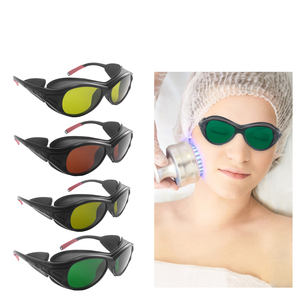
CE EN207 IR Radiation OD5+ OD7+ Laser Protective Goggles
Optical density OD5+ to OD7+ shielding engineered for 808nm, 980nm, and 1064nm bands. Anti-fog coated polycarbonate for industrial laser welding, medical IPL, and advanced optical fabrication.
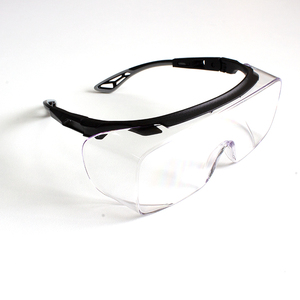
Heavy-duty construction goggles engineered with resilient nylon frames, lateral ocular shields, anti-scratch hard coatings, and certified high-mass particle barrier protections.
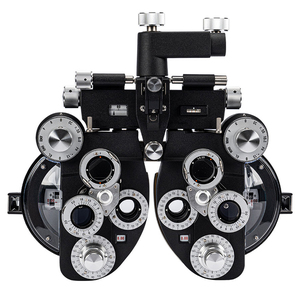
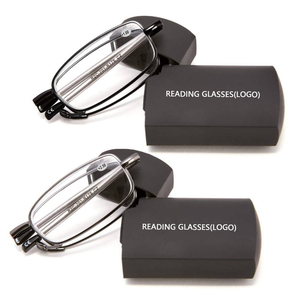
Portable Metal Foldable Progressive Occupational Reading Eyewear
Micro-hinged foldable alloy architecture optimized for technical multi-focal tasks, field engineers, cleanroom operators, and site supervisors needing fast focal adaptability.
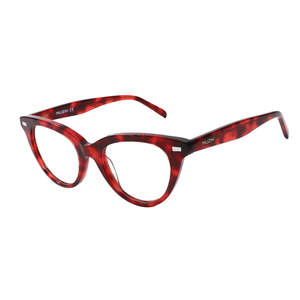
Milled hypoallergenic cellulose acetate frames designed for Rx prescription safety integration. Exceptional chemical resistance to industrial oils, cosmetic agents, and perspiration.
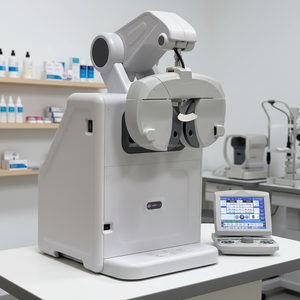
Passivated stainless steel enclosure frames built for clinical labs, optical test suites, and cleanroom certification displays. Highly resistant to oxidative degradation.
Engineering Standards for Industrial Ocular Protection: EN 166, EN 207 & ANSI Z87.1 Decoded
Industrial eye injuries represent one of the most persistent yet preventable workplace hazards worldwide. Selecting enterprise-grade ocular protection demands deep technical alignment between hazard analysis and protective materials engineering. As a factory-direct manufacturer and certified global supplier, we engineer safety glasses to address high-mass impact hazards, non-ionizing radiation risks, high-energy laser wavelengths, and aggressive chemical splashes.
Key Takeaway for PPE Category Managers:
A safety frame marked solely with general cosmetic or commercial approvals cannot be deployed in industrial environments. Procurement directors must require explicit compliance markings on both the ocular lens and frame chassis: including CE EN 166 (Mechanical Resistance Class F, B, or A), Optical Clarity Class 1, and explicit EN 207 L-ratings for laser-assisted production zones.
Material Performance Matrix: Polymer & Metallurgy Comparison
Modern eye protection balances structural elasticity, thermal tolerance, optical transmission, and mass comfort. The following data visualization demonstrates how standard materials deployed across our manufacturing facilities perform under rigorous laboratory test conditions:
Beyond structural integrity, surface treatments dictate operational longevity. Every protective ocular piece exported through our certified distribution facilities receives dual-sided hydrophobic anti-fog dipping and silica-infused anti-scratch polysiloxane hard coatings. This ensures zero optical aberration and preserves Class 1 visual clarity under 95% relative humidity and severe temperature shifts.
Procurement Intelligence
Future Sourcing Trends in Industrial Eye Protection (2025–2030)
The global industrial protective eyewear landscape is undergoing profound structural shifts driven by automation, automated laser manufacturing, ESG mandates, and tightening liability frameworks across the European Union and North America. Procurement heads and commercial distributors should prepare for several critical shifts:
1. Rise of Integrated Rx Customization
With an aging skilled manufacturing demographic, off-the-shelf over-the-glass (OTG) goggles are being phased out in favor of digitized, digitally surfaced prescription (Rx) safety glasses utilizing lightweight TR-90 and acetate composite frames.
2. Circular Polymers & Bio-Acetates
Regulatory frameworks such as the EU Corporate Sustainability Due Diligence Directive are driving industrial safety tenders to demand bio-based cellulose acetates and circular closed-loop polyamides with verified low lifecycle carbon footprints.
3. Multi-Spectrum Laser Wavelength Banding
The proliferation of handheld fiber laser welding and automated robotic cells demands hybrid dye-absorbing filters. Modern procurement tenders mandate wideband attenuation spanning 190-540nm and 800-1100nm concurrently inside a single optical lens substrate.
Furthermore, vendor consolidation is accelerating. Global supply chain leaders are minimizing multi-tier sourcing risks by partnering with vertically integrated manufacturers who control everything from optical tooling, injection molding, and CNC lens blank surfacing to automated packaging and containerized multi-port export dispatch.
Corporate Verification
Why Enterprise Importers Partner with Us: Direct Manufacturing Authority
Backing our manufacturing and global distribution operations is a fully audited business model built upon transparency, compliance, and multi-category eyewear capabilities:
Verified Direct Manufacturer
Eliminate unnecessary trading intermediaries. Orders flow directly into our dedicated fabrication floor equipped with precision hydraulic presses, multi-axis milling, and cleanroom optical lens assembly suites.
Rigorous Multi-Stage QA Testing
Every production lot undergoes 100% inspection for hinge actuation, lateral tension decay, drop-ball impact resistance, optical distortion, and surface coating adherence before hermetic export crating.
Global Export Logistics
Leveraging deep logistics connectivity across air and ocean freight hubs, we coordinate multi-destination bulk dispatches with custom labeling, HS-code documentation, and certified certificate-of-conformity packages.
Our dedicated operations desk, headed directly by Dharamchand Maheshwari, ensures rapid quotation response rates (88%+ turnaround inside business windows), dedicated material customization, and flexible minimum order quantities (MOQ) engineered to support emerging distributors alongside multinational industrial giants.
Procurement FAQ
Frequently Asked Questions by Industrial Safety Optical Buyers
What specific certifications do your industrial safety glasses hold for European and North American markets?
Our industrial eye protection series are manufactured to meet and exceed EN 166 (Personal Eye Protection), EN 170 (Ultraviolet Filters), EN 172 (Solar Protection for Industrial Use), and EN 207 (Laser Protective Eyewear). For the North American market, our eyewear conforms to ANSI/ISEA Z87.1-2020 high-velocity impact standards, clearly stamped on frames and lenses.
Can safety frames be customized with prescription (Rx) bifocal or progressive lenses?
Yes. We engineer dedicated RX-compatible safety chassis using high-impact nylon, TR-90, and milled cellulose acetate. These frames feature lens groove depths engineered to securely retain high-index single-vision, bifocal, or digital progressive lenses without compromising ballistic or chemical barrier protection.
What is the minimum order quantity (MOQ) for custom private-label or OEM manufacturing?
Our standard production runs accommodate balanced assortment plans across shapes, tints, and frame geometries. For standard catalog models, MOQs start as low as 300 to 500 units per colorway. Fully custom tooling, private laser-etched branding, and bespoke packaging solutions are supported at volume-tier production agreements.
How do you verify optical densities (OD) for laser safety goggles?
Each batch of our laser safety oculars is spectrally measured using calibrated UV-Vis-NIR spectrophotometers. Absorption curves and optical densities (OD5+, OD7+) are validated for specified target wavelengths (e.g., 808nm, 980nm, 1064nm, and 10600nm CO2 bands) and certified with traceable test reports accompanying export documentation.
What are your typical shipping terms and international delivery timelines?
We routinely execute shipments under FOB, CIF, CFR, and DDP terms. Production lead times generally range between 15 to 30 business days depending on tooling complexity and assortment customization. Express sample dispatch and consolidated air cargo services are available for expedited quality review.
Accelerate Your Industrial Eyewear Supply Chain
Connect with our technical export engineers to request compliant sample packs, factory compliance dossiers, and volume wholesale pricing schedules tailored to your enterprise distribution goals.