Industry Analysis & Sourcing Trends
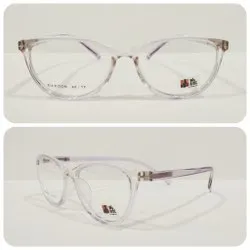
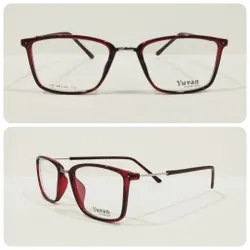
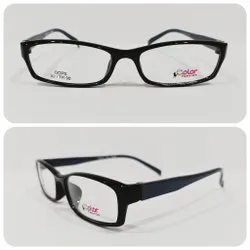
The Evolution of Mens Bifocal Eyewear: What International Buyers Must Know
A comprehensive technical appraisal of the global presbyopic eyewear market, detailing manufacturing standards, consumer shifts, and procurement strategies.
1. Why Mens Bifocal Eyewear Demands Higher Mechanical Precision
Unlike single-vision reading glasses or aesthetic fashion frames, mens bifocal eyewear functions as a high-precision medical-grade optical chassis. When an eye doctor prescribes a bifocal lens—whether a traditional Flat-Top 28 (FT-28), an executive Franklin segment, or a round kryptok bifocal—the lens possesses two discrete optical centers. If a spectacle frame exhibits bridge torsion or an improper pantoscopic angle (ideally between 7 to 10 degrees), the boundary line between the distance horizon and reading segment will misalign with the wearer's pupillary center.
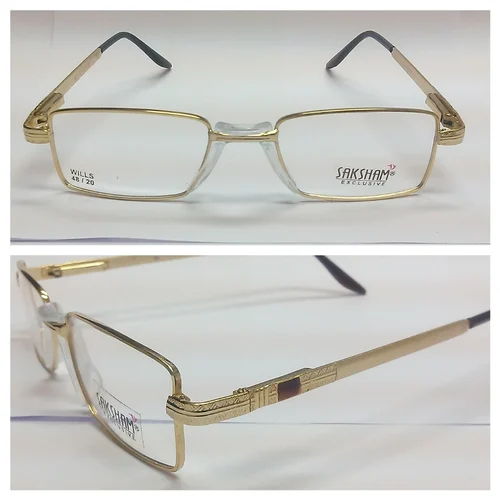
At S M Opticals, our Bhayander West factory implements computerized frame profiling. We strictly mandate that our mens bifocal eyewear frames feature a vertical lens depth (B-dimension) of no less than 32mm, with the optimal golden ratio falling between 34mm and 38mm. This physical space allows lab technicians to position the segment line precisely at the patient's lower eyelid margin, guaranteeing a generous 14mm to 18mm lower corridor for uninterrupted near tasks, such as reading paperwork, tablet navigation, and close inspection.
2. Product Development Trends: The Rise of "Invisible Bifocals" and Hybrid Materials
Modern procurement datasets from Europe, North America, and Southeast Asia demonstrate clear shifts in consumer behavior among men aged 42 to 65:
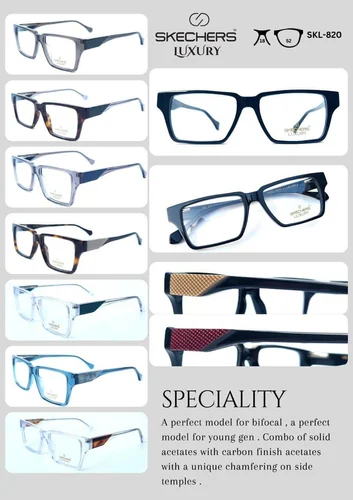
- Seamless Segment Concealment: While progressive addition lenses (PALs) remain popular, many mature wearers continue to favor bifocals because of their wider, distortion-free reading fields and zero peripheral swim effect. In response, modern frame design utilizes beveled inner eye-wire rims and deeper acetate coloration that physically obscure the visible dividing line of flat-top lenses from front-facing onlookers.
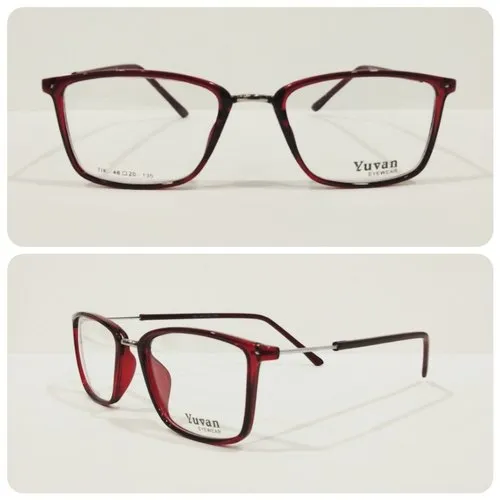
- Material Hybridization (Polymide & TR-90 Integration): Presbyopic lenses carry higher plus power (+1.50D to +3.50D), adding front-heavy weight. If paired with cheap injection plastics, the glasses constantly slide down the nose bridge. Our latest series integrate high-elasticity TR-90 temporal arms with cellulose acetate front chassis and stainless-steel skeleton wire cores, achieving optimal center-of-gravity distribution behind the mastoid process.
- Blue-Light & Photochromic Ready Rims: Professional men increasingly require single pairs for indoor monitor usage, paperwork, and outdoor daytime driving. Our frames incorporate ultra-deep groove security (1.2mm depth) to reliably host 1.56, 1.61, and 1.67 high-index bifocal photochromic lenses without flaking or cold-flow rim distortion.
3. Future Procurement Trends: Decentralized Manufacturing & Supply Chain Resilience
For decades, international optical wholesalers depended almost exclusively on single-region sourcing hubs. However, supply chain disruptions, rising labor costs, and geopolitical tariffs have caused top optical retailers to adopt a China+1 sourcing paradigm. India has swiftly become a favored production base for precision eyewear manufacturing.
As a registered manufacturer with established operations in Maharashtra since 2017, S M Opticals delivers distinct logistical and structural benefits to global buyers: factory-direct pricing devoid of trading house commissions, reliable English-language communication overseen directly by company head Dharamchand Maheshwari, and flexible minimum order quantities (MOQs) that empower retail chains to test varied assortments before committing to mass production.
Procurement Pro-Tip from Our Engineering Desk:
"When ordering wholesale mens bifocal frames, always audit the distance between lenses (DBL) relative to the frame wrap angle. An excessively curved sports frame (base curve > 6) introduces prismatic distortion in segmented bifocals. Standardize your core inventory on base curves between 4.0 and 5.0 to minimize customer adaptation failure and optical lab returns."