Procurement FAQ Frequently Asked Questions: Global Sourcing of Metal Spectacle Frames
Detailed technical, compliance, and logistical answers to help procurement directors make informed volume purchasing decisions.
What specific alloys are used in S M Opticals' metal spectacle frames?
Our metal spectacle frames utilize high-grade engineering alloys suited to their specific mechanical function. The primary chassis components—including front eyewires, bridges, and end-pieces—are engineered from durable nickel-silver, Monel, and 304/316L cold-rolled stainless steel. Stainless steel components offer superior tensile spring memory, low weight, and corrosion resistance against human sweat. For temple cores within our hybrid collections, ductile wire alloys allow optical dispensers to make custom cold-bend adjustments around the wearer's mastoid bone without structural fatigue or finish cracking.
How do your metal frames comply with international nickel release and corrosion standards?
To satisfy rigorous retail market regulations such as ISO 12870 and European EN 1811 nickel release guidelines, our metallic frames undergo multi-tier surface plating. Prior to final decorative color deposition (such as gold, gunmetal, ruthenium, or chrome), frames receive an impermeable barrier strike coat. Furthermore, finished frames are sealed with high-transparency cataphoretic or polyurethane lacquers baked at high temperatures. This barrier seals the underlying alloy, preventing direct cutaneous nickel migration, resisting green verdigris salt buildup, and passing standard 48-hour synthetic perspiration immersion tests.
Can our optical laboratory easily mount high-prescription or progressive lenses into these frames?
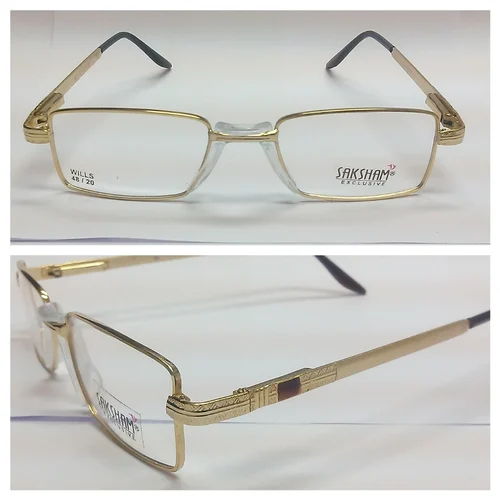
Yes. Proper optical laboratory glazing depends heavily on eyewire curvature (base curve uniformity) and lens groove profile. S M Opticals maintains strict stamping and CNC bending controls, ensuring our eyewire grooves provide an exact 110-degree to 120-degree V-profile. This accommodates modern automated 3D edger bevels for CR-39, high-index 1.67/1.74, and polycarbonate lenses. For presbyopic and progressive lens wearers, our Mens Bifocal and Saksham Eyewear collections maintain minimum B-measurement heights of 36mm or greater, guaranteeing sufficient vertical corridor height for reading additions without peripheral distortion.
What is your minimum order quantity (MOQ) and assortment policy for international shipments?
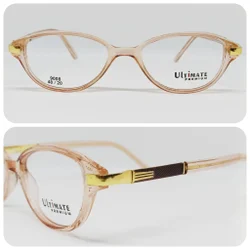
Unlike massive conglomerates requiring restrictive single-model MOQs exceeding thousands of units, S M Opticals supports agile procurement. As a factory-direct manufacturer and established supplier with 11 to 25 dedicated production personnel, we provide tiered MOQ programs. Importers can consolidate orders across our 13 core collections—including Ultimate Premium, Saksham Eyewear, and Fancy Metal—allowing mixed model and color assortments within a single export consignment. This structure lets retail chains test multiple contemporary shapes while keeping inventory liability minimal.
How does S M Opticals handle in-process quality control before export dispatch?
Quality assurance is conducted at three distinct stages under the personal supervision of our concern person, Dharamchand Maheshwari. Stage 1 verifies raw material alloy composition and joint solder integrity across bridges and end-pieces. Stage 2 evaluates surface smoothness, electroplating thickness, and lacquer clarity after ultrasonic cleaning. Stage 3 involves manual bench alignment: technicians check 4-point temple contact balance, smooth 5-barrel or spring hinge action, screw tension retention, and symmetrical pad arm alignment before wrapping each frame in protective sleeves and packing them into model-wise master cartons.
What are the freight lead times and shipping documentation provided for overseas buyers?
Located in Bhayander West (Thane / Mumbai metropolitan logistics zone), our manufacturing facility is located close to Nhava Sheva (JNPT) container port and Mumbai International Air Cargo Airport. Standard export consignments are processed with complete customs documentation, including GST-compliant commercial invoices (GST No. 27AILPM7839G1ZQ), packing lists with net/gross weights, Certificates of Origin, and Harmonized System (HS) optical frame classification codes. Air freight transit times generally range from 4 to 8 business days worldwide, while consolidated maritime shipping schedules are confirmed based on destination port requirements.
Can customized temple branding, private label pad printing, and custom demo lenses be integrated?
Yes, wholesale contracts can accommodate custom OEM branding specifications. Options include laser-etched temple inner logos, pad-printed model and sizing nomenclature (e.g., 52[]18-140), customized optical demo lenses with brand prints, and customized inner cellophane sleeve packaging. For private-label programs, our technical team reviews vector artwork and confirms stamp positions prior to full-run production runs.