 S M OpticalsSpectacle Frame Manufacturer · India
Sales Desk+91-8047836571
S M OpticalsSpectacle Frame Manufacturer · India Direct OEM manufacturing of CE-marked optical trial lenses, precision vision testers, refraction accessories, and specialized eyewear components for hospital procurement and clinical eye examinations across Austria.
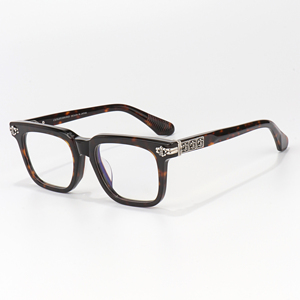
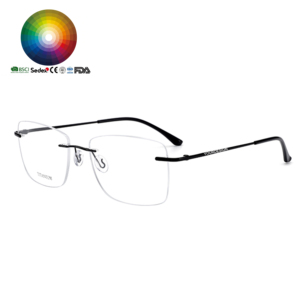
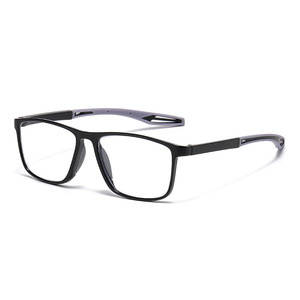
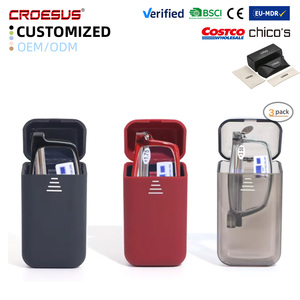
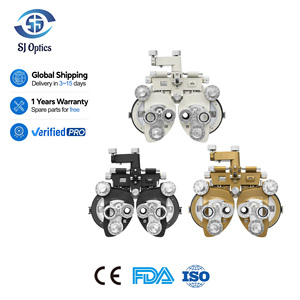
In the Austrian clinical optometry landscape, precise subjective refraction remains the indispensable gold standard for determining spectacle corrections and ophthalmic prescriptions. While automated objective autorefractors and computerized wave-front aberrometers have become pervasive throughout Vienna, Graz, Linz, and Salzburg, the definitive verification of patient accommodation, binocular balance, and stereoscopic fusion depends unreservedly on the physical optical trial lens set and trial frame. Under the Austrian statutory health system (Österreichische Gesundheitskasse - ÖGK) and private ophthalmic clinics (Wahlarzt-Praxen), refractive errors must be documented with absolute dioptric fidelity to ensure patient compliance, comfortable progressive lens glazing, and public insurance validation.
As premier manufacturers and precision engineering suppliers, our specialized facility designs, polishes, calibrates, and certifies high-performance optical trial lens sets meeting the rigorous threshold of the European Medical Device Regulation (EU MDR 2017/745) and international optical standards (EN ISO 9801:2009). Operating with advanced high-vacuum anti-reflective coating chambers, CNC edgers, and coordinate measuring machines (CMM), we supply Austrian ophthalmic distributors, clinic consortiums, and independent optical laboratories with trial lens apparatus characterized by minimal vertex distance aberration, true paraxial optical centering, and unyielding mechanical endurance.
Optical trial lenses serve as the baseline physical analog for actual ophthalmic spectacle lenses. A significant shortcoming encountered by Austrian optometry procurement specialists sourcing from non-certified low-tier producers is secondary spherical aberration resulting from inappropriate lens curvatures (such as flat equiconvex designs rather than calibrated meniscus forms) and unacceptable chromatic dispersion. Our trial lenses utilize pure K9 optical glass (equivalent to Schott crown glass) exhibiting a refractive index of $n_d = 1.523$ with an Abbe dispersion value of $V_d \ge 58.6$. This high Abbe value eliminates peripheral color fringing during cylinder power determination and high-diopter astigmatic axis orientation.
Furthermore, lens aperture geometry plays an essential functional role in diagnostic accuracy. We produce two primary mechanical configurations customized to distinct European diagnostic workflows:
Engineered for comprehensive field-of-view refraction, ideal for progressive lens simulation, dynamic binocular balance tests, and Austrian pediatric examinations where patient fixation stability is volatile.
Features thick precision-machined brass alloy carrier rims with blackened anti-reflection step internal bevels. Restricts high-power refractive lenses (+14.00D to -20.00D) to their central paraxial zone, minimizing spherical aberration.
Rims feature deep tactile laser engraving on both faces of the metal collar. International chromatic indexing: Red anodizing for minus (concave) spheres, black/silver for plus (convex) spheres, blue for cylinders, and green for prismatic elements.
| Nominal Power Range (Diopters) | EN ISO 9801:2009 Standard Limit | Our Factory In-House Tolerance | Prismatic Center Deviation | Austrian Clinical Relevance |
|---|---|---|---|---|
| 0.12D to 3.00D (Sph & Cyl) | ±0.06 D | ±0.02 D | < 0.10 Δ (cm/m) | High precision for mild myopia and presbyopic early additions |
| 3.25D to 6.00D (Sph & Cyl) | ±0.09 D | ±0.03 D | < 0.15 Δ (cm/m) | Standard Austrian school refraction and adult astigmatism |
| 6.25D to 12.00D (Sph) | ±0.12 D | ±0.04 D | < 0.20 Δ (cm/m) | Correct vertex distance accounting for high myopic corrections |
| 12.25D to 20.00D (Sph) | ±0.18 D | ±0.06 D | < 0.25 Δ (cm/m) | Aphakia, post-cataract evaluation, severe refractive pathology |
| Prisms (0.50Δ to 10.00Δ) | ±0.12 Δ | ±0.05 Δ | Base-Apex Alignment < 1.0° | Strabismus diagnosis, heterophoria compensation under ÖGK |
How our trial lens series and mechanical refraction apparatus integrate into federal medical clinics, private practice networks, and optical ateliers throughout Austria's distinct federal states (Bundesländer).
Deployed in complex diagnostic suites such as the Allgemeines Krankenhaus der Stadt Wien (AKH Wien), Kepler Universitätsklinikum Linz, and LKH-Universitätsklinikum Graz. Employed for pediatric amblyopia management, post-vitrectomy refractive stabilization, and corneal transplant refraction where automated aberrometry fails due to media opacities.
Over 60% of Austrian eye care seekers consult Wahlarzt (private physician) clinics to bypass standard appointment queues. Here, customer perception is paramount: luxurious walnut and leather-bound aluminum-framed trial lens cases paired with silent, ultra-smooth titanium trial frames instill confidence and validate high consultation fees.
Austrian certified master opticians (Augenoptikermeister) governed by the Austrian Federal Economic Chamber (WKO) demand trial lens sets calibrated to verify progressive lens corridors (e.g., Zeiss, Rodenstock, Essilor). Our trial lenses feature flat zero-glare profiles ensuring exact back vertex distance (BVD) matching the patient's selected acetate frame.
Serving mountainous regions across Tyrol, Carinthia, and Vorarlberg where rural elderly populations cannot easily reach urban clinics. Lightweight, impact-resistant cases with reinforced stainless steel latches and temperature-resistant damping foam protect the optical elements during sub-zero vehicle transit.
A trial lens set is only as effective as the trial frame (Messbrille) in which it resides. Austrian optometrists place profound emphasis on anatomical adjustability due to varied cranial geometries. Our synchronized trial frames provide continuous interpupillary distance (PD) adjustment ranging from 48mm to 80mm with calibrated vernier scales readable to 0.5mm. The lightweight titanium-aluminum chassis prevents nose pad slippage during prolonged astigmatic cross-cylinder testing (using the Jackson Cross-Cylinder ±0.25D / ±0.50D). Each frame cell accommodates up to four trial lenses (three anterior rotatable through 360 degrees for cylindrical axis fine-tuning, and one posterior cell positioned close to the eye for spherical baselines), ensuring zero unwanted lens tilt or vertex shifts.
Navigating EU MDR 2017/745, digital refraction workflow convergence, and evolving geriatric healthcare demographics in Central Europe.
As of May 2021, Medical Device Regulation enforcement in Austria via the Federal Office for Safety in Health Care (BASG) requires all trial lens sets to hold verified CE Class I self-declaration, technical documentation files, unique device identification (UDI-DI registration), and biocompatibility certificates for skin-contacting frames.
Austria is experiencing one of Central Europe's highest demographic aging curves. Over 22% of the population is aged 65+, leading to unprecedented demand for cataract post-surgical trial evaluation, progressive addition fine-tuning, and low-vision diagnostic filters (slit apertures, red/green Maddox rods, pinhole discs).
While automated digital phoropters expedite high-volume screenings, Austrian master opticians report a resurgence in trial frame prescribing. Patients frequently experience spatial disorientation when transitioning from automated phoropters to real-world walking environments. Physical trial frames permit real-world stair-walking and corridor checks.
Integrating deep expertise across optical lens processing, custom sheet-metal diagnostic enclosures, and high-tolerance frame construction.
We eliminate trading intermediaries. Our state-of-the-art facility directly commands blank molding, curve generator surfacing, diamond bevel edging, and laser power calibration.
Every trial set shipped to Austria is accompanied by CE Declaration of Conformity, lot-traceable inspection certificates, and standardized English/German instructions for use (IFU).
Backed by our industry-leading 88% direct call and inquiry response rate. Austrian procurement officers speak directly with technical product managers capable of customizing diopter increments.
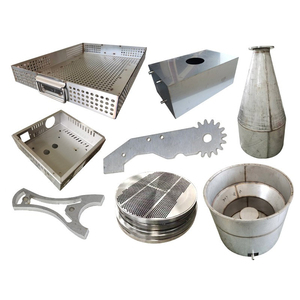
Leveraging in-house CNC laser cutting, bending, and specialized metallurgical fabrication, we construct custom heavy-duty medical carrying cases, aluminum consoles, and mobile refraction carts.
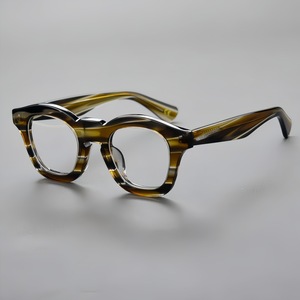
Beyond diagnostic trial lenses, our production line manufactures acetate, TR-90, beta-titanium, and polyamide frames. We understand the physical interface between diagnostic lenses and real frame ergonomics.
Regular consolidated air cargo dispatches to Vienna Schwechat (VIE) Airport with full support for Austrian customs clearance, EORI documentation, and reverse-charge VAT compliance.
Clear answers regarding EU MDR certifications, customs clearance, calibration protocols, and order customization.
Request a comprehensive B2B quotation, optical tolerance data sheet, or custom OEM production sample. Our technical sales desk responds promptly to your project requirements.