GST Verified Manufacturer Bhayander West, Thane, Maharashtra, India +91-8047836571 · 88% Response Rate
Send Business Enquiry

China Best Fishing Polarized Sunglasses Manufacturer & Supplier

Precision Polarization Engineering, Triacetate Cellulose (TAC) & Polyamide Lenses, and Turnkey OEM/ODM Supply Chains for Global Marine Eyewear Brands.

99.8%
Surface Glare Polarized Efficiency
100%
Full Spectrum UV400 Photoprotection
< 0.85
Specific Gravity (Ultra-Light Floating Frames)
ISO 12312
ANSI Z87.1 & CE Certified Compliance

Engineered Optical Systems & Tactical Eyewear Showcase

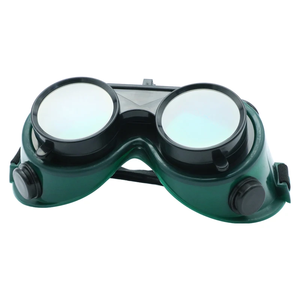
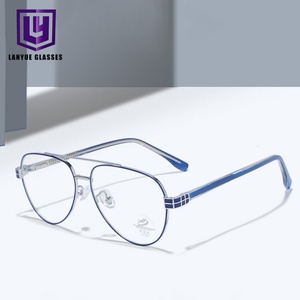
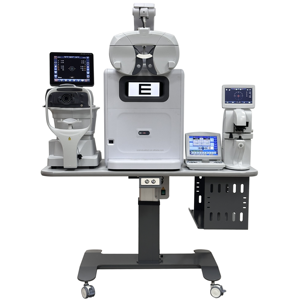
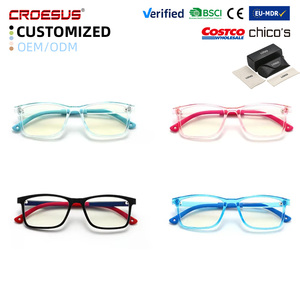
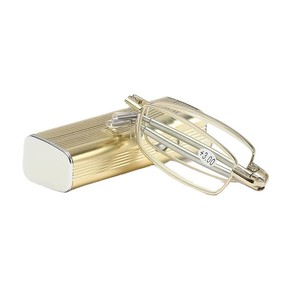
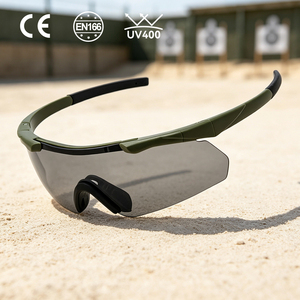
From tournament-grade polarized watercraft glasses to industrial-grade safety spectacles and pediatric protective frames, our manufacturing line integrates advanced polymeric extrusion and precision lens coating.

Optical Engineering: Polarized Light Mechanics in Marine Environments

An authoritative analysis of Brewster’s angle, multi-layer wafer lamination, and chromatic contrast optimization under variable pelagic conditions.

Brewster's Angle Elimination

When sunlight encounters open water, reflectance peaks at Brewster’s angle (approx. 53° for seawater). Our polyvinyl alcohol (PVA) stretched polarization filters achieve an extinction coefficient of 99.8%, eliminating blinded sightlines and enabling sight fishing into deep subsurface shelves.

7-to-9 Layer Wafer Stacking

We deploy PVA film thermal-compression between dual triacetate cellulose (TAC), polycarbonate (PC), or polyamide (Nylon) sheets. The stack incorporates anti-reflective (AR) rear coating, hydrophobic slip layers, and vacuum-deposited flash dielectric mirrors.

Wavelength-Specific Tints

Precision-dosed inorganic pigments calibrate luminous transmittance (VLT). Deep sea applications leverage 10-12% VLT Blue Mirror on grey bases; inshore brackish flats utilize 14-16% Green Mirror over copper-amber to isolate structural anomalies and game fish motion.

Substrate Material Abbe Value (Chromatic Aberration) Impact Resistance (ANSI Z87.1) Density (g/cm³) Specific Polarization Efficiency Optimal Deployment
Injected Polyamide (Nylon) 52 (Exceptional optical clarity) High (Passes steel ball drop) 1.02 (Ultra-lightweight) > 99.5% (Internal PVA bond) Tournament offshore angling
Triacetate Cellulose (TAC 1.0mm) 56 (Minimal dispersion) Moderate (Everyday utility) 1.27 > 99.0% (Economical lamination) Commercial retail collections
Polycarbonate (PC Wafer) 30 (Structural chromatic slip) Extreme (Military ballistic) 1.20 > 99.2% (Injection overmold) Tactical bass fishing & hunting
Mineral Glass (Corning) 59 (Maximum scratch immunity) Low-to-Medium (Chem-tempered) 2.53 (Heavy) 99.9% (Planar precision) Luxury coastal lifestyle

Strategic B2B Sourcing: Future Trends & Innovations

Procurement analytics demonstrate a significant shift in enterprise purchasing behavior across Europe, North America, and Australasia.

Low-Density TPX Floating Polymers

Anglers routinely forfeit high-end eyewear to the deep. Our engineering lab integrates polymethylpentene (TPX) resins yielding a specific gravity between 0.83 and 0.85. The entire assembled frame floats naturally in both freshwater and saline marine setups without clumsy buoyant foam retainers.

Circular Bio-Based Polymers

Global supply chain mandates now prioritize ESG metrics. We offer frames synthesized from castor oil bio-polyamide (Rilsan Clear G850) and ocean-recycled nylon nets. These materials retain mechanical memory, skin inertness, and structural rigidity comparable to virgin petrochemical TR90.

Photochromic-Polarized Fusion

Modern angling spans rapid meteorological shifts. Next-generation hybrid lenses combine molecular spiro-naphthoxazine photochromic dies directly on the polar filter, shifting from Category 2 (clouded dawn) to Category 3/4 (blinding open midday sun) within 45 seconds.

Why Global Brands Partner with Us: Manufacturing Architecture

Combining scalable mass-production capabilities with rigorous optical bench testing and turnkey industrial design.

In-House Injection & CNC Milling

Equipped with automated multi-cavity injection molds for Swiss TR90 and engineering resins, alongside high-precision 5-axis CNC cutters for cellulose acetate sheets. We achieve dimensional tolerances within ±0.05mm, eliminating temple warpage and frame asymmetry.

Cleanroom Vacuum Magnetron Sputtering

Our Class 10,000 optical coating laboratories utilize multi-target magnetron sputtering to deposit hydrophobic, oleophobic, and anti-static dielectric layers. Salt spray resistance exceeds ASTM B117 standards over 240 hours without delamination.

Full E-E-A-T Quality Assurance

Every batch undergoes rigorous quality gates: optical power and prismatic deviation verification, drop-ball impact testing (FDA 21 CFR 801.410), hinge cycle durability (20,000 continuous flex cycles), and spectral transmittance spectrophotometry.

Request complete technical datasheets, full OEM sample kits, or on-site facility audit packages.

Send an Inquiry

Frequently Asked Questions (Sourcing & Procurement FAQ)

Critical operational answers addressing lead times, optical certifications, custom tooling, and material customization.

What are the optical advantages of Nylon/Polyamide polarized lenses over standard TAC?
While TAC (Triacetate Cellulose) is a cost-effective, lightweight solution with solid optical clarity, Nylon (Polyamide) lenses deliver an Abbe value of 52, drastically reducing chromatic aberration. In addition, injection-molded polyamide lenses do not suffer from the internal material stress birefringence common in stamped polycarbonate, ensuring crystal-clear depth perception critical for sight casting.
How do you ensure zero lens delamination under prolonged saltwater exposure?
Delamination occurs when saltwater penetrates lens edges, swelling the hydrophilic PVA polarizing core. We deploy automated 360° laser edge-sealing techniques combined with a specialized epoxy barrier coat. Furthermore, our hard-coated outer layers pass the 240-hour ASTM B117 salt spray chamber test without pitting or edge peeling.
What are the standard Minimum Order Quantities (MOQ) and production lead times for OEM projects?
For ready-to-ship catalog models with customized private-label laser etching, our baseline MOQ starts at 300 units per colorway. For bespoke tooling requiring custom steel mold development and industrial styling, MOQ is typically 1,200 units per model. Prototyping takes 15–20 days; mass production lead time is standard at 35–45 days post-approval.
Which international protective eyewear standards are verified across your shipments?
Our polarized sunglasses comply with all major regional trade criteria: ISO 12312-1 (European Union CE mark), ANSI Z80.3 (United States FDA requirements), and AS/NZS 1067.1 (Australia/New Zealand maritime protection standards). High-velocity tactical models carry certified compliance with ANSI Z87.1-2020 impact parameters.
Can you manufacture prescription-ready (Rx-able) polarized fishing sunglasses?
Yes. We design high-wrap 8-base and 6-base sport sunglasses featuring removable optical Rx clip adapters, or engineered bevel grooves cut specifically to accommodate progressive and single-vision freeform polarized prescription lenses without pop-out risks.