 S M OpticalsSpectacle Frame Manufacturer · India
Sales Desk+91-8047836571
S M OpticalsSpectacle Frame Manufacturer · India From laboratory laser attenuation goggles and IP titanium diagnostic chassis to memory-flex TR90 systems, explore high-tolerance trial hardware manufactured for ophthalmic practices.
In modern optometry, visual refraction is not merely a diagnostic phase; it constitutes the cornerstone of clinical patient comfort, astigmatism detection, and precision progressive lens glazing. When institutional buyers across Japan—including optometry centers in Tokyo, eye clinics in Osaka, and dispensing chains in Fukuoka—source optical equipment, trial frames are subjected to stringent metrological and tactile evaluations. A superior trial frame set supplier must bridge the gap between heavy-duty engineering resilience and micro-level human ergonomic adaptation.
Japanese clinical procurement requires meticulous adherence to both JIS (Japanese Industrial Standards) and medical device safety regulations overseen by the PMDA (Pharmaceuticals and Medical Devices Agency). As ocular diagnostics evolve toward identifying high-order aberrations, any mechanical play, axis drift, or temple flexure in a trial frame directly ruins refractive outcomes. This technical brief details the localized application criteria, engineering requirements, and manufacturing systems powering our cross-border supply chain directly into Japan.
The operational framework of Japanese optometric facilities differs markedly from North American or European environments. Clinic compact layouts, hyper-aging demographic trends, and extensive screen utilization define daily clinical trials:
Over 29% of Japan's population is aged 65 or older. Testing requires lightweight alloy and polymide trial frames that avoid nasal cartilage strain during lengthy progressive additions and near-point convergence evaluations.
Rapid transit retail dispensaries (near JR stations in Shibuya, Shinjuku, or Umeda) conduct refractions within 10–15 minute cycles. Smooth rotating dials, clear cylindrical axis indices, and friction-less drop-in lens cells are paramount.
Medical research laboratories demand micro-adjustable interpupillary distance (IPD) mechanisms down to 48mm for pediatric amblyopia tracking, ensuring zero off-axis optical distortion.
Historically, Japanese practices relied exclusively on heavyweight metal trial frames. However, rapid shifts in clinical workflows have catalyzed new procurement trends:
1. Demand for Low-Inertia Hybrid Materials: While stainless steel and titanium remain staples for gears and screws, the optical frame front and side arms are increasingly shifting toward engineering polymers such as high-grade polymide and medical-grade TR-90. These reduce total frame chassis weight from >75 grams down to under 50 grams, substantially minimizing nose-pad slippage during cylinder axis adjustment.
2. East Asian Craniofacial Geometry Adaptation: Standard Western trial frames frequently present bridge clearance issues and temple clamp force mismatches on East Asian cranial profiles. Japanese practitioners require trial systems featuring adjustable pantoscopic tilt (up to 15 degrees), wide vertex distance scales (10mm to 16mm), and multi-position splay nose-pads designed specifically for flatter nasal bridges.
3. Seamless Four-Cell Multi-Lens Coaxial Indexing: With the rise of custom wavefront-guided digital lenses and complex toric progressive profiles, trial frames must hold up to three anterior lenses and one posterior lens simultaneously without rotational backlash or loose cell fitment.
| Critical Parameter | Standard International Specs | Japanese Clinic High-Precision Requirement | Supplier Manufacturing Verification |
|---|---|---|---|
| IPD Adjustment Range | 52 mm – 72 mm | 48 mm – 76 mm (Pediatric to Adult) | Laser-etched Vernier scale, 1mm indexing |
| Astigmatic Axis Scale | 5° increments | 1° fine steps with 360° dual-side dials | Smooth damping rotation; zero free-play |
| Nose Bridge Articulation | Single height screw | 3D Multi-Axis: Height, angle, and depth | Hypoallergenic silicone & titanium core |
| Lens Cell Capacity | 3 Front / 1 Back | 3 Front / 1 Back with anti-scratch locks | Spring-loaded leaf clips tested for 50,000 cycles |
| Temple Length & Flex | Fixed angle slider | Extendable 90–140mm + Stepless ear hook | Flexible polymide/memory metal cores |
Established as an authorized manufacturing enterprise operating since 2017 under GST registration 27AILPM7839G1ZQ, our manufacturing facility delivers end-to-end optical hardware solutions directly from the factory floor to global importers, retail brands, and clinical optical buyers.
We eliminate trading markups and communication gaps. Our on-site manufacturing infrastructure controls CNC stamping, injection molding of polymide and TR-90, and vacuum IP titanium plating under stringent quality control protocols.
Every trial frame and optical chassis is evaluated before shipment. We audit hinge torque resistance, vernier legibility, mechanical axis alignment, and optical center concentricity to prevent clinical diagnostic drift.
Supporting over 13 categorized eyewear collections—ranging from kids' unbreakable frames to adult bifocal and presbyopia diagnostic hardware—we provide tailored model split packaging and custom branding for hospital chains.
Led personally by industry specialist Dharamchand Maheshwari, our trade desk maintains an 88% prompt inquiry resolution rate with international air/sea logistics ready for Tokyo (NRT/HND), Osaka (KIX), and regional hubs.
Yes. Our trial frames feature standard 38mm outer diameter trial lens rings, ensuring seamless fitment with conventional trial lens sets, manual phoropter accessories, and automated lens projection setups commonly utilized across Japanese optical hospitals and clinics.
Each chassis undergoes optical axis concentricity inspection. The 360-degree cylindrical axis graduations are laser-engraved with an index precision of ±0.5°, eliminating graduation blur and preventing parallax errors during astigmatic cross-cylinder testing.
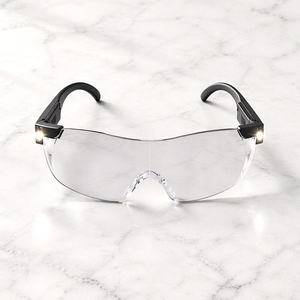
Absolutely. As an integrated manufacturer, we encourage cross-category assortment consolidation. Importers frequently combine clinical trial frame sets with our commercial TR90 anti-blue light glasses, IP titanium frames, and dual LED magnification headsets in a single shipping container.
Standard inventory items and catalog assortments are prepared for dispatch within 5–10 business days. For customized OEM trial assemblies or custom private-label branding, production cycles range from 20–30 days, supported by expedited door-to-door air freight to Tokyo and Osaka.
Every commercial export is supplied with a comprehensive Commercial Invoice, Packing List with model-wise assortment breakdown, Certificate of Origin (COO), and factory metrology inspection certificates confirming dimensional stability.
Connect with our technical engineering desk today for full specification sheets, bulk wholesale price lists, and sample unit evaluations.