 S M OpticalsSpectacle Frame Manufacturer · India
Sales Desk+91-8047836571
S M OpticalsSpectacle Frame Manufacturer · India Engineered for commercial game-fishing charters, open-ocean racing, alpine lake angling, and maritime rescue operations across New Zealand. Each chassis features positive specific gravity polymers, anti-salt hydro-oleophobic TAC polarized optics, and ergonomic wrap contours.
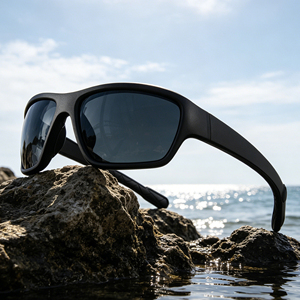
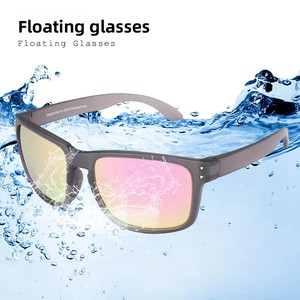
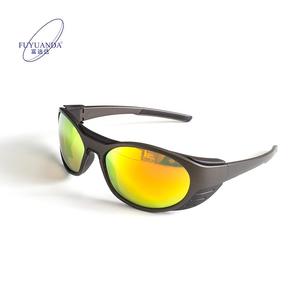
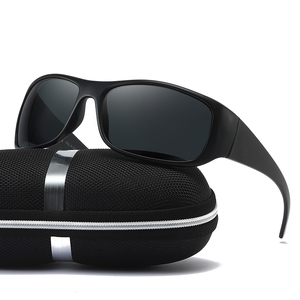
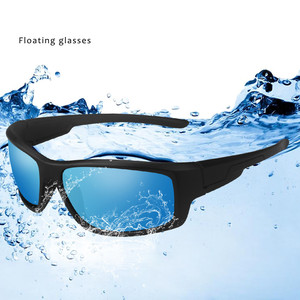
Why traditional acetate, metal, and generic nylon sunglasses sink into the Pacific abyss — and how advanced Polymethylpentene (TPX) co-polymer science preserves gear investments for Kiwi ocean sportsmen.
| Polymer System | Specific Gravity (g/cm³) | Freshwater Buoyancy (ρ = 1.0) | Oceanic Buoyancy (ρ = 1.025) | Flexural Yield Strength | Thermal Distortion Point | AS/NZS 1067 Suitability |
|---|---|---|---|---|---|---|
| Custom Injection TPX Resin | 0.825 – 0.840 | Positive (Instant Float) | Positive (High Freeboard) | High (Impact Return) | 145°C (Deck Stability) | Exceeds All Thresholds |
| Air-Chamber Injected TR-90 | 0.980 – 1.010 | Neutral / Marginal Float | Positive (Low Freeboard) | Very High (Memory Plastic) | 120°C | Meets Category 3 Spec |
| EVA Foam Gasket TR/PC | 0.950 – 1.020 | Flotation via Cell Gasket | Positive Buoyancy | Moderate Shock Buffer | 85°C (Foam Degrades) | Meets Category 3 Spec |
| Standard Eyewear Acetate | 1.280 – 1.320 | Sinks Rapidly (>0.4m/s) | Sinks Rapidly | Rigid / Heat Formable | 70°C (Softens in Boat) | Fails Water Recreation |
| Standard Monel/Nickel Metal | 7.800 – 8.800 | Instant Sink to Abyss | Instant Loss Risk | Rigid / Corrosive Salt Risk | 300°C+ | Unsuited for Maritime Action |
Our triacetate cellulose (TAC) lenses employ a 7-ply laminated matrix containing a transverse PVA polarizing film. Outer layers feature oleophobic and vacuum-deposited anti-salt moisture seals, eliminating the saline ring corrosion common in the Hauraki Gulf and Cook Strait.
Curved wrap-around sport sunglass frames (8-base curve) cause prismatic optical distortion if uncorrected. Our precision injection-molded decentered geometries realign refracted focal angles straight onto the pupil, preventing eyestrain during prolonged nautical tracking.
New Zealand’s proximity to the ozone depletion vortex mandates uncompromising luminous transmittance standards. Every batch conforms rigorously to Category 3 criteria (8%–18% VLT), providing 100% barrier isolation against UVA (315–400nm) and UVB (280–315nm) radiation.
From the crystalline freshwater flats of Lake Taupo to the violent breaker breaks of the North Shore, these sunglasses solve critical loss risks and visual limitations for recreational and commercial water operators.
Cruising the Bay of Islands, Cape Brett, or Waihau Bay for striped marlin and yellowtail kingfish requires uncompromised sight-casting clarity. If knocked overboard during gaffing or rough swells, TPX frames float instantly on the wash with high surface visibility.
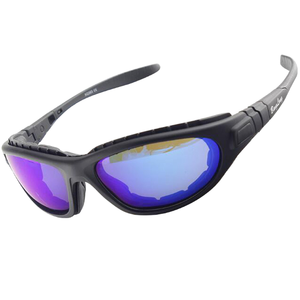
At Raglan, Piha, and Mount Maunganui, heavy wave breaks and violent barrel roll-overs instantly dislodge traditional sunglasses. Foam-gasket models cushion hydrodynamic facial impact while preventing sinking through dense whitewater foam.
Stalking elusive wild brown and rainbow trout in Tongariro River, Lake Rotorua, or Queenstown requires amber/bronze polarized lenses that cut surface refraction without dimming shadow banks. TPX density ensures total buoyancy even in low-mineral freshwater.
Crews in Marlborough Sounds green-lipped mussel farms and Stewart Island salmon hatcheries spend 10-hour shifts under brutal UV reflections off metal barges. Ultra-light <19g frames relieve temporal bone pressure and eliminate expensive eyewear write-offs.
A statistical and consumer-behavior shift is reshaping maritime gear buying among Kiwi sports retailers, marine accessory distributors, and outdoor supply chains.
With more than 1.8 million New Zealanders participating in recreational boating annually (Maritime NZ survey data), boaters, kayakers, and stand-up paddleboarders actively upgrade to dedicated float-capable accessories to avoid losing expensive standard sunglasses overboard during launches and dock maneuvers.
New Zealand experiences solar peak UV indices topping 12–14 throughout summer due to its geographical isolation, unpolluted atmosphere, and elliptic earth orbit. Public health awareness initiatives have shifted purchasing from cosmetic fashion shades to certified Category 3 high-wrap polarized protective eyewear.
Independent New Zealand surf lifestyle brands, fishing tackle cooperatives, and marine mechanics seek factory-direct OEM suppliers to bypass expensive Australian distribution markups. Direct container and LCL air shipments yield 55%–70% gross margins for local brand operators.
Combining proprietary resin compounding, precision CNC mold tooling, and zero-compromise optical QA testing under one integrated ISO-compliant manufacturing roof.
Procure directly from our specialized injection and optical assembly unit. We eliminate secondary traders, passing pure unit cost savings directly to New Zealand importers, distributors, and department stores.
Every single frame undergoes hinge tension cycling (10,000 actuations), polar axis alignment testing (±1° precision tolerance), salt-fog exposure, and freeboard buoyancy verification in saline testing baths before packaging.
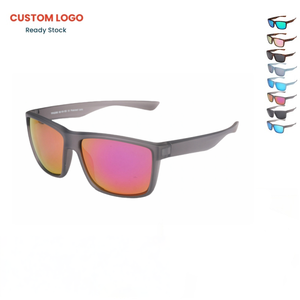
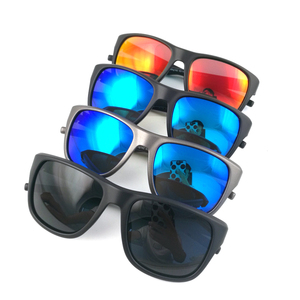
Mix shapes, matte/gloss TPX finishes, and revo mirror tints (Green Emerald, Ice Blue, Rosé, Smoke, Amber) in a single consolidated consignment. Full OEM pad-printing, microfiber pouching, and barcode integration supported.
Established freight lanes with door-to-door DDP air cargo and consolidated seafreight straight to Port of Tauranga, Ports of Auckland, and Lyttelton (Christchurch), backed by end-to-end customs documentation compliance.
Essential guidance on regulatory standards, minimum orders, customs clearance, and product customization for Kiwi optical wholesalers and retail chains.
Yes. In New Zealand, sunglasses are regulated under the Fair Trading Act (Sunglasses and Fashion Spectacles Product Safety Standard). All our floating sport sunglass models are batch-certified under AS/NZS 1067.1:2016 for Category 3 general-purpose or Category 4 high-protection aquatic use. Full optical test reports from accredited testing laboratories (verifying zero refractive power error, Category 3 luminous transmission between 8%–18%, and complete UV400 absorption) are furnished with commercial order contracts.
We provide a highly accessible MOQ framework tailored for independent New Zealand tackle stores, surf shops, and outdoor brand launches. For factory in-stock models requiring custom laser-etched lenses or temple pad printing with your proprietary logo, the MOQ starts at 300 to 500 units across an assortment of frame colors and lens tints. Fully custom tooling for proprietary frame geometry typically requires 1,200 units.
Yes. Our frames engineered from Polymethylpentene (TPX) possess a specific gravity of approximately 0.83 g/cm³. Because pure freshwater has a density of 1.00 g/cm³ and ocean water sits at approximately 1.025 g/cm³, our frames maintain high positive buoyancy (high freeboard) in both freshwater lakes (Lake Taupo, Lake Wakatipu) and open oceanic environments, preventing sinking even under turbulent wake conditions.
Production cycles for custom-branded bulk orders typically require 25 to 35 business days depending on order size and color complexity. For urgent seasonal replenishment, air express (via Auckland AKL cargo hub) arrives in 4 to 7 working days. For bulk sea containers, consolidated LCL or FCL shipments reach Ports of Auckland or Port of Tauranga in 16 to 22 transit days. We supply full bills of lading, packing lists, commercial invoices, and tariff classification codes (HS Code 9004.10) for seamless New Zealand Customs Service (Customs NZ) clearance.
Yes. We specifically recommend three specialized tint configurations for the NZ maritime and alpine sectors: (1) Deep Sea Blue Mirror over Grey Base: Ideal for offshore game fishing in the open Pacific and Hauraki Gulf; (2) Green Emerald Mirror over Amber/Brown Base: Engineered for inshore snapper stalking, flats sight-casting, and riverbed trout visibility; and (3) Rose Gold / Silver Mirror over Smoke Base: Ideal for bright, high-altitude alpine lake boating and lifestyle retail displays.
All metallic hinge pins, internal springs, and fasteners are fabricated exclusively from marine-grade 316 stainless steel or passivated alloy coatings. During our quality assurance process, random samples from each batch undergo 72 hours of continuous ASTM B117 neutral salt spray fog testing without developing pitting, seized hinge mechanisms, or oxidation bloom.
Partner directly with a certified manufacturer. Request our 2025/2026 floating optical catalog, complete AS/NZS compliance test files, and factory-direct volume pricing delivered straight to your inbox.