1.61 / 1.67
MR-Series High Index Availability
±0.02D
CNC Digital Free-Form Tolerance
2,400,000+
Annual Pairs Exported Globally
< 0.28%
Standard Defect Rate (AQL 1.0)
Free-Form PAL
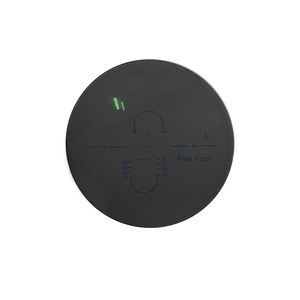
- Refractive Index: 1.61 MR-8 Resin
- Optical Corridor: 12mm / 14mm Standard
- Coating: Green Multi-Coated (HMC)
- Base Curve: 2C True Spherical
Anti-Blue Office
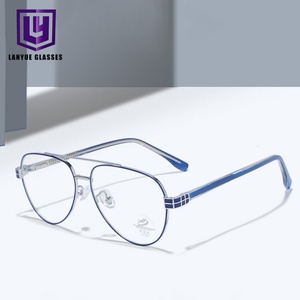
- Filter Cut: 420nm High Energy Blue
- Frame Style: Ergonomic Business Executive
- Lens Core: Multi-Zone Intermediate
- Hinges: Reinforced 3-Barrel Metal
β-Titanium Rimless
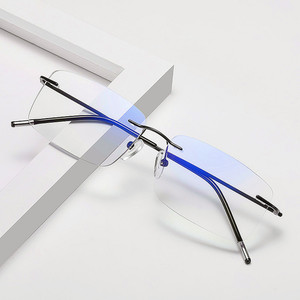
- Frame Net Weight: ≤ 8.2 Grams
- Bridge / Temples: Pure Titanium Ti-99.3
- Lens Edging: CNC Diamond Beveled
- Corridor Profile: Soft Progression Dynamic
Indoor / Outdoor Photo
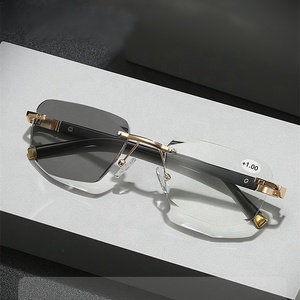
- Activation Speed: < 35s UV Response
- Fade-back Cycle: < 90s to Clear State
- UV Protection: UV400 Full Spectrum Cut
- Application: Dual Desktop / Driving
Acetate-Titanium Hybrid
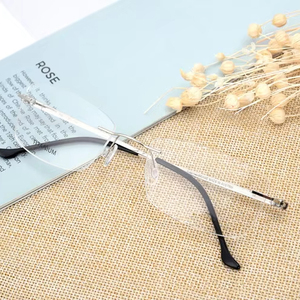
- Frame Material: Cellulose Acetate + Ti Wire
- AR Coating: Super Hydrophobic Topcoat
- Lens Shape: Geometric Rectangular
- Presbyopia Range: +1.00D to +3.50D
Photochromic Titanium
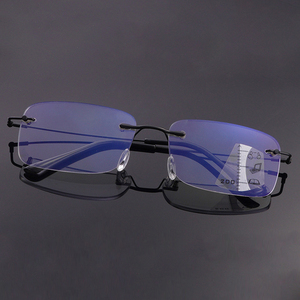
- Multi-Matrix: Spin-Coated Monomer Tech
- Nose Pad System: Medical Grade Silicone Air
- Aberration Filter: Ultra-Low Astigmatic Zone
- Export Standard: ANSI Z80.1 / ISO 21987
TR90 Memory Polymer
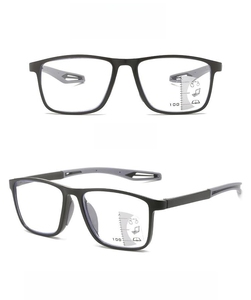
- Chassis: Swiss Grilamid TR90
- Zone Structure: Infinitesimal Corridor Step
- Flex Endurance: > 25,000 Bridge Flex Cycles
- Weight: 12.4g (Excluding Glazing)
Polarized Sun-Readers
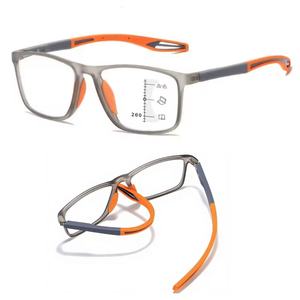
- Filter Type: Polarized TAC + PAL Addition
- Glare Reduction: 99.4% Surface Reflectance
- Primary Utility: Automotive Driving + Map Read
- Impact Rating: FDA 21 CFR 801.410 Pass
Industry Whitepaper Report
China's Progressive Lens Ecosystem: Free-Form Surfacing & Industrial Scale
The global ophthalmic landscape has experienced an irreversible structural pivot over the past decade. Where progressive addition lenses (PALs) were historically confined to boutique laboratory production with elongated lead times and cost-prohibitive retail markups, China's modern manufacturing hubs—predominantly concentrated across Danyang, Wenzhou, and Shenzhen—have integrated semiconductor-grade CNC digital free-form surfacing with high-throughput injection molding. This vertical convergence enables direct OEM/ODM supply chains to deliver clinical-precision progressive reading glasses at unprecedented unit economics.
Modern progressive addition optics eliminate the aesthetic stigma and abrupt prismatic displacement ("image jump") inherent in conventional flat-top bifocals. By mapping a smooth gradient of increasing dioptric power down an asymptotic corridor, presbyopic wearers enjoy uninterrupted visual acuity from distant infinity, through intermediate screen-viewing ranges (50–70cm), directly down into near reading planes (30–40cm). Attaining this performance in mass-production wholesale mandates rigorous algorithmic optimization, sub-micron diamond point tooling, and multi-layer vacuum magnetron sputtering for anti-reflective (AR) hard coatings.
Supply Chain Insight: Modern B2B procurement strategies are shifting away from pre-packaged commodity OTC readers toward tailored semi-finished progressive blanks and assembled turnkey progressive frames featuring digitally mapped corridor geometries.
Ophthalmic Substrate & Coating Specifications Matrix
| Substrate Material |
Refractive Index (Nd) |
Abbe Value (νd) |
Specific Gravity |
Impact Threshold |
Recommended Fitting Target |
| CR-39 Monomer Resin |
1.499 |
58 |
1.32 g/cm³ |
Standard FDA Drop Ball |
Full-rim acetate frames; entry-level wholesale lines |
| MR-8 Impact Polymer |
1.600 |
41 |
1.30 g/cm³ |
High Tensile (Rimless Ready) |
Rimless titanium, supra half-eye styles, premium retail |
| MR-7 Ultra-Thin Resin |
1.670 |
32 |
1.35 g/cm³ |
Medium-High Structural |
High diopter presbyopia (+2.50D to +4.00D) slim profiles |
| Optical Polycarbonate (PC) |
1.586 |
30 |
1.20 g/cm³ |
High-Velocity Ballistic |
Active lifestyle, sports progressive readers, safety glazing |
| Photochromic Spin-Resin |
1.560 - 1.610 |
36 - 38 |
1.28 g/cm³ |
Reinforced Multi-Coat |
All-in-one transitional eyewear, driving & reading outdoors |
Point-by-Point Back Surface Surfacing
Traditional casting embeds the progressive power corridor onto the front convex surface, exaggerating peripheral swim effect and restricting lateral visual fields. Forward-thinking procurement now favors 100% digital back-surface free-form cutting, which places the power matrix closer to the cornea, widening functional field of view by up to 34%.
Harmonized Multi-Layer Vacuum Nano-Coating
The modern consumer demands integrated surface performance. High-vacuum magnetron sputtering chambers now apply 16+ layer stacks incorporating diamond-like carbon (DLC) hard coatings, oleophobic fluorochemical topcoats with water contact angles exceeding 115°, and selective blue-attenuation notches that preserve true-color perception.
Demographic Age Compression & Smart Working
Remote digital work and handheld screen engagement have precipitated earlier presbyopic intervention. Sourcing portfolios must now incorporate "short corridor" dynamic geometry (10mm - 12mm fitting heights) tailored for compact frames, enabling younger demographic adoption without compromising mid-distance computer clarity.
Manufacturing Capabilities
Factory-Direct Infrastructure: Precision, Yield, and Traceability
Operating as an integrated manufacturer and exporter, our facility bridges the critical operational gap between industrial scale and bespoke optical craftsmanship. We maintain end-to-end sovereignty over every manufacturing milestone: from in-house mold tooling, high-precision polymide and TR90 injection, and CNC titanium cutting, up to cleanroom robotic coating and batch-wise optical power mapping.
Class 10,000 Cleanroom
Automated ultrasonic dipping and ultrasonic degreasing lines ensure zero particle contamination during hard-coating lacquer curing.
Dual-Sided Polishing
Toric and progressive back-surfaces are finished with flexible polishing pads, eliminating micro-ripples and secondary wavefront errors.
Spectrophotometric QA
Every coating run undergoes spectral transmission verification to certify strict UV400, anti-blue cut, and luminous transmittance compliance.
AQL 1.0 Export Packaging
Frames and lenses are model-assorted, barcode-tagged, and vacuum-protected against maritime humidity and transit impact.
By eliminating intermediate brokerage entities, international distributors and retail chains capture significant margin headroom while retaining direct communication with our optical engineering team. Customizations such as private label laser engraving, pantoscopic tilt calibration (8° - 10° optimization), and custom-blended masterbatch acetate colors are executed with expedited prototyping lead times.
What is the technical distinction between "Hard Design" and "Soft Design" progressive corridors?
Hard designs concentrate the astigmatic aberration into smaller, highly dense zones in the nasal and temporal peripheries, yielding wider reading and distance zones but requiring precise pupil positioning and a steeper learning curve for users. Soft designs spread the unavoidable surface astigmatism across larger peripheral regions, softening blur gradients, minimizing the vestibular "swimming sensation," and providing an easier transition for novice presbyopes. For mass wholesale OTC readers, our factory primarily utilizes modified soft designs with a 14mm balanced corridor.
How do your factories ensure consistency in pupillary distance (PD) for mass-market progressive readers?
Unlike single-vision readers where focal centers can tolerate slight decentration without significant prismatic aberration, progressive lenses must align precisely with the wearer's ocular axis. For pre-assembled wholesale progressive readers, our lenses are glazed to an industry-standard universal monocular pupillary distance of 31.0mm (total binocular PD of 62.0mm) with a 2.5mm nasal inset for the reading progression corridor. For custom OEM orders, we provide custom decentration based on your target demographic's anatomical facial profile (e.g., Caucasian vs. Asian ergonomic fits).
Which international regulatory certifications accompany shipments to the US and EU markets?
All manufactured progressive reading glasses conform strictly to regional medical device directives. For the United States, our products carry FDA Establishment Registration and Device Listings with 100% batch impact verification under FDA 21 CFR 801.410 (Drop Ball Testing). For the European Union, products comply with Regulation (EU) 2017/745 (MDR) for Class I non-sterile ophthalmic devices, validated under EN ISO 21987 (Mounted Ophthalmic Lenses) and EN ISO 12870 (Spectacle Frames), bearing full CE conformity marking and REACH chemical safety declarations.
What are your minimum order quantities (MOQ) and production lead times for custom OEM progressive frames?
For in-stock catalog models with standard diopter assortments (+1.00D through +3.50D in +0.50D increments), our standard MOQ is 300 to 500 pairs per model across assorted standard colors. For custom OEM frame manufacturing—including custom pantone acetate sheets, titanium CNC tooling, specialized corridor algorithms, or private branding—MOQs start at 1,200 pairs per tooling run. Rapid prototyping samples are completed within 7–12 business days, while volume bulk manufacturing schedules average 35–45 days from master proof sign-off.
Can you manufacture photochromic progressive lenses with integrated blue-light cut properties?
Yes. We deploy an advanced dual-process integration: the lens monomer base contains internal UV420 nano-absorbers to attenuate high-energy visible violet-blue light indoors, while a surface-applied spin-coat matrix of spiro-naphthoxazine photochromic dye rapidly activates upon exposure to direct solar UV radiation (360–380nm). This achieves an optical transition from >88% luminous indoor transmission down to <18% outdoor transmission (Cat. 3 sun tint) in under 45 seconds, providing an all-in-one solution for both desktop and outdoor presbyopic use.
Ready to Upgrade Your Wholesale Progressive Eyewear Portfolio?
Connect directly with our export engineering desk to receive comprehensive catalog pricing, material swatch books, and free-form optical test blanks for laboratory evaluation.
Send an Inquiry