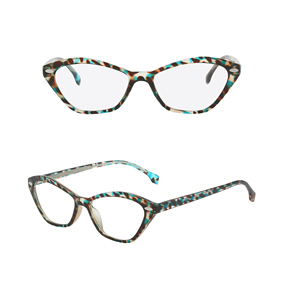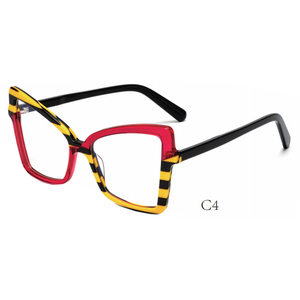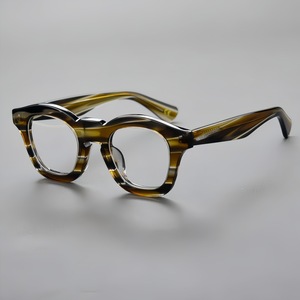
S M OpticalsSpectacle Frame Manufacturer · India Direct-from-factory wholesale inventory and custom bespoke eyewear manufacturing. Built using surgical stainless steel, pure IP titanium, Mazzucchelli-grade acetate, and premium monomer resins.
Commercial blue light blocking glasses frequently suffer from chromatic distortion and excessive yellow tinting due to crude substrate dyes. Our high-precision manufacturing facility implements dual-layer nano-interference vacuum sputtering alongside monomer-level blue absorptive chemistries.
By engineering the dielectric stack (alternate layers of ZrO2 and SiO2) under strict vacuum chamber parameters, our lenses reflect harmful High Energy Visible (HEV) radiation precisely within the 415nm–455nm hazard window, maintaining a photopic luminous transmittance (Tv) greater than 96.5%.
| Optical Feature | Mass-Market Eyewear | Our Factory Standards |
|---|---|---|
| Blue Filtering Spectrum | Non-selective 380–420nm | Targeted 415–455nm Bandpass |
| Base Substrate | Recycled Acrylic / CR-39 | Optical-Grade 1.61 / 1.67 MR-8 Resin |
| Coating Hardness (Bayer) | 1.5 – 2.0 H | 6.0 – 8.0 H (Super Hydrophobic HMC) |
| Color Balance (YI) | High Yellow Index (>12) | Ultra-Neutral Clarity (YI < 3.2) |
| Reflectance Backside | Reflective Glare Hazard | Anti-Blue UV400 AR Dual Surface |
From raw sheet extrusion to five-axis CNC machining, vacuum ion plating, and robotic lens glazing, our production ecosystem provides true factory-direct transparency without broker margins.
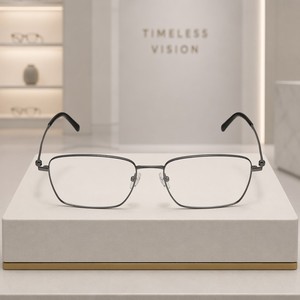
Equipped with high-precision fiber laser cutting systems and automated wire-bending machinery, we craft intricate stainless steel, alloy, and sheet metal frames with structural tolerances under ±0.03mm.
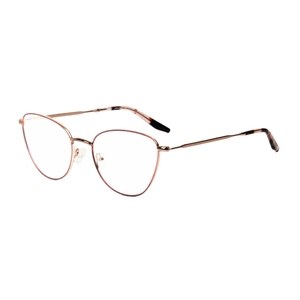
Our titanium and metal spectacle frames undergo multi-stage physical vapor deposition (PVD) ion plating in cleanroom environments, delivering extreme wear resistance, nickel-free hypoallergenic contact, and lasting color luster.
We source top-tier plant-based cellulose acetate flakes, cured over 90 days to prevent post-production warping. CNC milled, core-wire reinforced, and tumble-polished with walnut shell granulate for 72 hours to achieve mirror-smooth finishes.
Integrated lens manufacturing facility producing 1.56, 1.61, 1.67, and 1.74 high-index clear and anti-blue progressive lenses. Point-by-point back-surface calculation guarantees broad vision corridors and minimal astigmatic swim.
Every production batch passes strict optical bench verifications: spectrophotometer spectral transmittance, 500g steel ball drop impact testing (FDA CFR 801.410), hinge 20,000-cycle endurance, and cross-hatch adhesion checks.
Complete custom branding options including laser logo engraving, hot-foil stamping on temple interiors, bespoke eco-friendly packaging, and custom mold tooling development with low minimum order quantities (MOQ).
How institutional optical buyers, pharmacy retail chains, and digital-first D2C eyewear brands are navigating shifting consumer demands and regulatory frameworks.
Traditional reflective anti-blue coatings generate an unsightly purple-blue metallic glare that distracts viewers on video calls and webcam streams. Global purchasing trends show an accelerating shift toward clear substrate absorption (monomer blue block), where HEV absorbers are polymerized directly into the resin matrix. This yields virtually zero cosmetic glare with superior cosmetic appeal.
ESG compliance is shifting from an optional marketing claim to an essential purchasing prerequisite in European and North American markets. Importers are prioritizing eco-acetates plasticized with bio-based triethyl citrate rather than fossil-derived phthalates, alongside recycled medical-grade TR-90 and lightweight aerospace titanium frames.
Consumers are demanding hybrid versatility. The standard computer glass is evolving into an all-day multi-scenario lens combining indoor digital blue-cut filtration with rapid UV-activated spin-coating photochromic darkeners for outdoor glare suppression. Optical buyers are consolidating stock keeping units (SKUs) around these dual-action solutions.
Consult this engineering matrix when selecting material specifications based on your brand positioning, price band, and target demographic.
| Material Classification | Specific Density (g/cm³) | Tensile / Flexural Strength | Corrosion & Hypoallergenic Index | Ideal Retail Positioning |
|---|---|---|---|---|
| Beta Titanium (Ti-15V-3Cr-3Sn-3Al) | 4.51 (Ultra-Lightweight) | > 1000 MPa (Exceptional Memory) | 100% Bio-compatible / Acid Resistant | Flagship Luxury / Clinical Executive Lines |
| High-Density Cellulose Acetate | 1.28 (Solid Feel) | High Rigidity (Custom Core Wire) | Resistant to sebum and cosmetic creams | Designer Boutiques / Retro Fashion Lines |
| Engineered TR-90 (Swiss Grilamid) | 1.14 (Floats on water) | Extremely Flexible (Fatigue proof) | Inert polymer / Zero nickel exposure | Active Lifestyle / Kids Eyewear / Mass Volume |
| 316L Surgical Stainless Steel | 7.95 (Slim Structural Profile) | High Modulus (Laser Cut Precision) | Passive Chromium Oxide Layer | Minimalist Geometric / Everyday Urban Eyewear |
| Medical Liquid Silicone | 1.08 (Ultra-Soft Elasticity) | Tear-resistant / Bendable 360° | Food-Grade Contact Safe / Non-Toxic | Pediatric Eyewear / Flexible Screen Protectors |
Straight answers regarding factory audits, compliance certifications, customized prototyping, and international supply chain logistics.
Our complete optical product lines comply fully with international personal protective equipment and medical optical standards. Every production shipment can be furnished with certified third-party lab test reports including ANSI Z80.3 (USA), EN ISO 12312-1 (EU), AS/NZS 1067.1 (Australia), and FDA CFR 801.410 Impact Drop Ball certification. Our manufacturing plant operates under ISO 9001 quality management systems and maintains active FDA factory registration.
Monomer blue-cut lenses incorporate specialized organic chemical absorbers directly into the liquid optical resin before polymerization. This blocks HEV light by direct absorption inside the lens core, ensuring no blue reflection on the exterior surface. Coated blue-cut lenses use a clear standard substrate with vacuum-deposited dielectric AR (anti-reflective) coatings that reflect blue light away at the surface. We provide both technologies, as well as hybrid solutions combining both methods for high-glare digital screen usage.
For in-stock finished frames and standard anti-blue plano lenses, our MOQ starts at just 100 to 300 pieces per model with mixed color assortments. For custom OEM frame manufacturing requiring unique tooling, proprietary acetates, or custom laser fabrication, typical MOQs are 500 to 1,200 pieces per mold. We support growing optical brands with flexible scaling tiers.
Yes. Our automated Rx optical surfacing laboratory utilizes German free-form generators and vacuum coating chambers. We fulfill wholesale prescription orders for 1.56, 1.60, 1.67, and 1.74 high-index progressives, bifocals, single-vision myopia, and astigmatism corrections. Prescription orders can be edge-glazed directly into selected optical frames before dispatch.
Before batch assembly, all frame hinges undergo pneumatic 20,000-cycle open-and-close fatigue simulations. Frame fronts are subjected to high-temperature humidity chambers (60°C at 90% RH for 48 hours) to verify dimensional stability and rule out warping. Temple wire insertions are checked under X-ray or optical comparators to confirm perfect alignment and tension balance.
Initial rapid 3D CAD modeling and prototype samples take approximately 7 to 10 working days. Physical CNC handmade prototypes can be delivered within 14 to 20 days. Mass production lead times range between 35 and 50 days depending on frame complexity, surface finishing (such as hand polishing or IP electroplating), and custom packaging specifications.
Speak directly with our senior optical engineers. Request spectral transmission reports, physical sample swatches, or a comprehensive wholesale quotation tailored to your target volume.