 S M OpticalsSpectacle Frame Manufacturer · India
Sales Desk+91-8047836571
S M OpticalsSpectacle Frame Manufacturer · India Direct factory procurement across customized trial lenses, automated refraction equipment, and ergonomic polymide, titanium, and acetate mounting assemblies for vision science professionals.
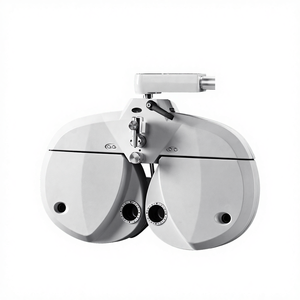
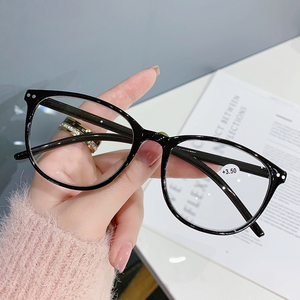
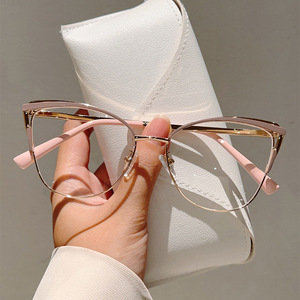
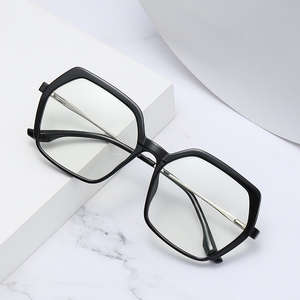
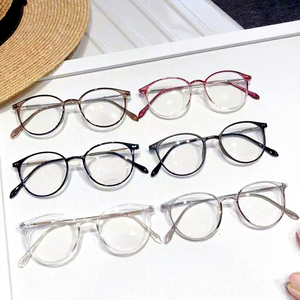
In modern optometric science and ophthalmic examination, the optical trial lens set remains the absolute gold standard for subjective refraction. While automated phoropters and wave-front aberrometers accelerate preliminary diagnostics, clinical verification relies strictly on tangible, high-precision trial lenses.
Every trial lens manufactured in our OEM partner facilities strictly conforms to ISO 9801:2009 standards for ophthalmic instruments. Back vertex focal power tolerances are held within ±0.02D for sphere lenses below 6.00D and ±0.06D for high-power lenses up to ±20.00D, eliminating compound diagnostic error.
Lenses are encased in either full-aperture (36mm to 38mm outer diameter) lightweight aluminum, medical-grade brass, or high-tensile polymide rims. Rims are color-coded (red for minus, black for plus, blue for cylinders, silver for prisms) and permanently etched using computer-guided laser ablation to prevent fading.
Employing premium Grade A Schott-equivalent K9/BK7 crown glass and optical CR-39 substrates. Dual-sided vacuum broadband anti-reflective (BBAR) coatings achieve a 99.4% light transmission rate, virtually eliminating ghost reflections that cause patient accommodation hesitation.
| Lens Classification | Dioptric Power Span | Step Graduation | Back Vertex Tolerance (ISO 9801) | Rim Mounting Options |
|---|---|---|---|---|
| Spherical (Plus / Minus) | ±0.12D to ±20.00D | 0.12 / 0.25 / 0.50 / 1.00D | ±0.02D to ±0.09D | Metal Rim (38mm) / Polymide (36mm) |
| Cylindrical (Astigmatism) | ±0.12D to ±6.00D | 0.12 / 0.25 / 0.50D | ±0.02D to ±0.05D | Axis Engraved Fixed/Rotatable Inner Rim |
| Prismatic Elements | 0.5Δ to 10.0Δ | 0.5Δ / 1.0Δ / 2.0Δ | ±0.05Δ Deviation Angle | Basemarked Aluminum / Knurled Brass |
| Auxiliary & Occluders | Slit, Pinhole, Maddox, Polarized, Red/Green | Standard Aperture (0.5/1.0mm) | Precision Micro-Laser Centered | Matte Black Light-Absorptive Polymer |
| Cross Cylinder (Jackson) | ±0.25D, ±0.50D, ±1.00D | Paired Axis Flip Mechanism | ≤ 0.03D Symmetry Tolerance | Ergonomic Knurled Stainless Handle |
Global supply chain evolution, changing clinic economics, and technological leaps are reshaping how international buyers, distributors, and clinic chains procure optical trial lens kits.
Institutional hospital chains are phasing out generic, bulky 266-piece wooden boxed kits. The demand has pivoted toward application-tailored diagnostic sets: ultra-portable 128-piece pediatric sets, low-vision examination modules, and mobile outreach kits enclosed in military-grade aluminum flight cases.
Distributors in North America and Western Europe are aggressively cutting multi-tiered reseller margins. Sourcing directly from certified manufacturing entities offering comprehensive OEM capabilities—including customized laser-etched branding, bespoke focal scales, and private-label packaging—provides over a 38% cost-of-goods advantage.
While digital refraction systems expand, trial lenses remain indispensable for cross-verifying final prescription comfort prior to glazing progressive lenses. Modern clinical workflow standards mandate trial-frame walks for patients, driving steady global replacement cycles for high-clarity trial optics.
The manufacturing floor for ophthalmic trial lenses has moved far beyond classical wet polishing. Cutting-edge manufacturing technologies now guarantee unparalleled optical consistency.
Eliminating subjective lensometer inspections, modern facilities implement full-aperture laser phase-shifting interferometers to assess wavefront aberrations, spherical deviation, and astigmatic power across the entire clear 25mm to 36mm aperture.
Frequent handling during rapid refraction introduces fingerprint oils and moisture smudges. The application of chemical vapor deposited (CVD) super-hydrophobic top-layers ensures rapid cleaning with lint-free wipes without degrading dioptric power marks.
Replacing traditional heavy electroplated brass, advanced polymide injection rims provide extreme dimensional stability, high impact resistance, and zero metallic skin allergy reactions during pediatric and sensitive patient examinations.
Built upon robust industrial infrastructure, verified legal compliance, and deep material expertise across polymide, high-elastic TR90, optical acetate sheets, and precision metals.
Operates under verified corporate registration (GST No. 27AILPM7839G1ZQ) operating continuously since 2017. Direct factory floors eliminate multi-layered broker markups, giving our global partners genuine primary-tier pricing.
From precision optical glass grinding to cutting-edge spectacle chassis fabrication in polymide, metal alloys, TR-90 memory polymers, and cellulose acetate sheets, our production plants ensure seamless integration between trial lenses and trial frames.
Every trial set undergoes 100% hinge action, lens seating alignment, surface scratch check, and focal power re-indexing prior to model-wise packing. Our dedicated export logistics desk guarantees protected maritime and air shipments worldwide.
A systematic, transparent process tailored for clinical device distributors, optical brand owners, and governmental health tenders.
Define lens count (e.g. 266, 232, 104 pcs), rim caliber (36mm or 38mm), material (metal/polymide), and dioptric intervals.
Provide private-label CAD markings, rim laser engraving requirements, carrying case branding, and custom color rings.
Sample production, vertex power verification reports, coating transmission curves, and pre-production sign-off.
Zero-defect packing in compartmentalized vibration-damped aluminum cases, customs documentation, and scheduled logistics.
The global optometric standard is 38mm outer rim diameter (with an internal clear optical aperture of approximately 25mm to 26mm). We also fabricate 36mm outer diameter lenses tailored specifically for smaller lightweight trial frames and specialty pediatric trial sets.
Metal rims (aluminum or brass) provide superior classical durability, weight stability, and high resistance to wear during repeated insertions into metal trial frames. Polymide rims are significantly lighter, corrosion-proof, available in vibrant molded color codings, and minimize overall set weight for mobile clinics.
Yes. As a direct OEM manufacturer, we engineer custom sets ranging from specialized low-power screening sets (0.12D steps) to extended high-power surgical post-op sets (±25.00D). Auxiliary filters such as polarized filters, red-green filters, cross-grid targets, and pinholes are completely customizable.
Shipments can be accompanied by comprehensive factory verification sheets including vertex dioptric focal tolerance logs, concentricity inspection records, and ISO 9801 conformity declarations. Third-party pre-shipment inspections (e.g. SGS) are gladly facilitated.
For standard branded case sets without modified optical tooling, our MOQ begins at 20 sets. For fully custom rim tooling, specialized lens coatings, or proprietary case configurations, initial order batches typically range from 50 to 100 sets.
Every trial set is nested within high-density CNC cut closed-cell EVA foam beds. These trays are mounted in anodized aluminum cases with vapor seals and desiccant packs, followed by reinforced multi-layer corrugated export cartons to withstand global multi-modal shipping.
Connect directly with our senior engineering and export sales directors. Request detailed engineering drawings, dioptric tolerance compliance sheets, and wholesale contract pricing for trial lens sets and optical frames.
Get Catalog