
GST Verified Manufacturer Bhayander West, Thane, Maharashtra, India +91-8047836571 · 88% Response Rate
Send Business Enquiry
0%

China is a major sourcing destination for eyewear, with manufacturers offering metal frames for different markets, budgets, and design needs. Their capabilities can range from basic assembly to custom development, but the right fit depends on more than a product photo or a low quoted price. This guide to Top Metal Spectacle Frames Manufacturers in China introduces practical points buyers can use when comparing suppliers.

Metal Spectacle Frames require careful attention to material selection, shaping, welding, finishing, and fit. Stainless steel and titanium, for example, differ in weight, flexibility, and cost. Small details matter. Hinge movement, edge smoothness, plating consistency, and the alignment of nose pads can affect comfort and durability. Ask manufacturers about their production processes, inspection steps, customization options, and experience with your target specifications. Request clear product records, sample frames, and written quotations before making comparisons. A sample may look excellent under showroom lighting, yet reveal uneven color or a stiff hinge in daily use. That is worth checking.

The manufacturers discussed in this overview should be treated as starting points, not automatic endorsements. Capabilities, lead times, and minimum order quantities can change, so verify current details directly with each supplier. Even a careful review has limits; a factory’s own claims are not the same as independent testing. Use the information here to shape better questions and identify suppliers whose evidence matches your requirements.
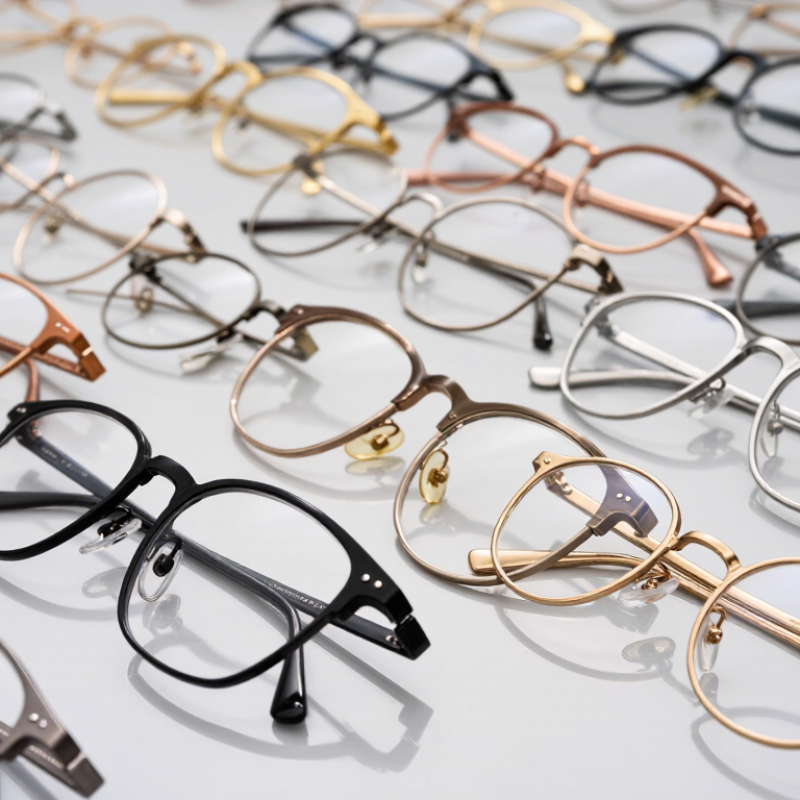
Top Metal Spectacle Frames Manufacturers in China

Overview of Metal Spectacle Frames

Metal spectacle frames are valued for their slim appearance, precise shaping, and adjustable fit. Common materials include stainless steel, titanium, and flexible titanium alloys. Each behaves differently: stainless steel can feel firm and substantial, while titanium is often chosen for its lighter feel. Material names alone do not guarantee comfort or durability. Frame thickness, joint design, and finishing also matter.

Tips: Check the nose pads, hinge movement, and temple alignment. Look for smooth edges around the bridge and lens rims. Small rough spots can become noticeable after hours of wear.

When reviewing a frame, consider how its parts are made and assembled. A well-fitted hinge should open evenly without feeling loose, and the temples should sit level rather than press hard behind the ears. Coatings affect appearance and may wear with repeated contact, so inspect high-touch areas closely. A glossy surface can look excellent under showroom lights, yet reveal uneven plating in daylight. That detail is easy to miss. Fit testing is not always perfect, either; face shape and daily use can change what feels comfortable.

China’s Role in the Metal Eyewear Industry

China’s Role in the Metal Eyewear Industry

China’s role extends beyond assembling finished frames. Its manufacturing network links metal forming, hinge production, polishing, plating, and packaging, often within short shipping distances. In a workshop, that can mean a prototype moves from a cut stainless-steel front to a polished sample without crossing several countries. Not just assembly. It also supports a range of order sizes and design revisions, though lead times and finishing consistency still need careful checking.

Grand View Research estimated the global eyewear market at US$183.36 billion in 2023, reflecting demand that supports broad manufacturing capacity. UN Comtrade records for HS 9003 identify China among the leading exporters of spectacle frames and mountings. Important detail: this trade category includes frames made from different materials, so it cannot measure metal-frame exports alone. Buyers assessing Chinese suppliers should therefore request material specifications, coating details, sample checks, and production tolerances. A polished sample is useful, but it does not prove every batch will match. That gap deserves attention.

China’s Role in the Metal Eyewear Industry

China’s crude steel production provides context for the country’s broader metalworking and manufacturing ecosystem. It is an upstream industry indicator, not a measure of spectacle-frame production.

Source: World Steel Association, worldsteel crude steel production statistics. Figures are in million tonnes.

Materials and Manufacturing Processes for Metal Frames

Metal spectacle frames balance strength, weight, flexibility, and skin comfort. Stainless steel is durable and resists everyday moisture, while titanium offers a lighter feel and strong corrosion resistance. Some frames use nickel-silver alloys, which can be cost-effective but need careful material disclosure for sensitive wearers. The best choice depends on the frame shape and intended use, not just the material name.

Manufacturing usually begins with cutting or stamping metal strips, followed by bending each rim and shaping the bridge and temples. Skilled workers join components through soldering or laser welding, then polish edges so they feel smooth against the skin. Plating or other surface treatments add color and help protect the finish. Hinge alignment and repeated opening tests matter: a frame can look excellent but still feel uneven on the face. Small variations are hard to eliminate completely.

Tips: Ask for material specifications, coating details, and hinge-cycle checks. Inspect the nose pads and temple tips for rough edges. A bright finish is not proof of lasting quality; test samples under normal handling before approving a production run.

Top Metal Spectacle Frames Manufacturers in China - Materials and Manufacturing Processes for Metal Frames

Overview of commonly used eyewear metals, frame-making processes, and practical quality checks. Material grades and specifications should be confirmed for each product.
Material or Process Typical Use in Eyewear Key Characteristics Common Manufacturing Steps Checks to Specify
Stainless steel Rims, temples, bridges, and small frame components Strong and corrosion-resistant; can be made into relatively thin sections. Formability and spring behavior depend on the alloy and temper. Sheet cutting or stamping, forming, welding or soldering, deburring, polishing, and surface finishing Confirm alloy designation, dimensional consistency, joint integrity, edge smoothness, and coating adhesion.
Titanium Lightweight rims, temples, bridges, and structural parts Low density and good corrosion resistance. Joining and finishing require processes suited to titanium. Cutting or stamping, precision forming, suitable welding, polishing, and compatible surface treatment Verify material documentation, weld quality, alignment, surface condition, and finish consistency.
Beta titanium Flexible temples and other parts designed for elastic recovery A titanium alloy category used where spring-like behavior is desired; performance varies with composition and heat treatment. Precision cutting, controlled forming, heat treatment where specified, joining, and finishing Request the exact alloy and condition; assess dimensional accuracy and repeatable flex and recovery.
Nickel silver (copper-nickel-zinc alloy) Frame fronts, temples, and components that are subsequently finished or coated Workable and suitable for forming and finishing. Despite its name, it contains no silver; nickel content can be relevant for skin-contact requirements. Stamping or cutting, forming, soldering, polishing, and plating or other surface finishing Confirm composition and applicable nickel-release requirements; inspect plating coverage and exposed edges.
Monel (nickel-copper alloy) Frame fronts and temples in some metal-frame constructions Formable and commonly used in eyewear, but nickel content makes material disclosure and skin-contact compliance important. Cutting or stamping, forming, soldering, polishing, and protective or decorative finishing Check alloy documentation, nickel-release compliance where applicable, joint strength, and coating uniformity.
Cutting and stamping Creating frame-front blanks, temples, and small metal parts Stamping is suited to repeat production from sheet; laser or other cutting methods may be selected for geometry and production needs. Prepare material, cut or stamp profiles, remove burrs, and inspect dimensions before forming Set tolerances for profile, hole position, burrs, and left-right part matching.
Forming and shaping Giving rims, bridges, end pieces, and temples their required contours Controlled forming supports fit and symmetry; spring behavior depends on material, thickness, and processing. Bending, pressing, sizing in fixtures, and checking frame-front geometry Inspect symmetry, lens-groove alignment, temple angle, and dimensional repeatability.
Welding or soldering Joining bridges, end pieces, hinges, and other frame components The appropriate joining method depends on the alloy, joint design, and required appearance and strength. Prepare mating surfaces, position parts in fixtures, join, clean, and finish the joint Check joint strength, alignment, visible residue, heat distortion, and compatibility with the base metal.
Polishing and surface finishing Preparing visible surfaces before final coating or delivery Mechanical polishing, brushing, or other finishing can change surface appearance and should be consistent across parts. Deburr, polish or brush, clean, and inspect before coating Specify the intended surface appearance and inspect for scratches, pits, uneven gloss, and sharp edges.
Plating or PVD coating Providing color, decorative appearance, or a finished surface on compatible frames Coating performance depends on substrate preparation, coating system, process control, and use conditions. Clean and prepare the surface, apply the specified coating, then inspect and test representative samples Define color and finish samples; assess adhesion, coverage, wear resistance, and applicable skin-contact requirements.
Final assembly and inspection Hinges, screws, nose pads, temples, and finished frame sets Consistent assembly supports fit, function, and serviceability. Install components, adjust frame geometry, clean, and conduct final visual and functional inspection Check hinge movement, screw security, nose-pad alignment, frame symmetry, sharp edges, and packaging protection.

Notable Metal Spectacle Frame Manufacturers in China

Notable metal spectacle frame manufacturers in China are often distinguished by focused production skills, rather than one striking catalogue. Some concentrate on stainless steel, while others work with titanium or mixed-metal designs. Their capabilities can include cutting, soldering, polishing, surface finishing, and assembly. A neat sample is only a starting point.

Small details matter. Check whether hinges open smoothly, solder joints look even, and nose pads sit level. Ask how the factory controls frame dimensions between batches. A reliable manufacturer should explain its inspection steps and provide clear specifications, not just attractive product photos. Confirm materials, finish options, minimum order quantities, and sample lead times before production begins.

For buyers, comparing a few suppliers can reveal meaningful differences in communication and process control. Request a sample, then inspect it under bright light for rough edges, uneven plating, or loose components. Ask how defects are recorded and corrected. No supplier is flawless, and a polished sample cannot guarantee every batch. That part deserves honest scrutiny. Clear records, practical answers, and consistent follow-through are useful signs when assessing a potential manufacturing partner.

How to Evaluate Chinese Metal Frame Manufacturers

Top Metal Spectacle Frames Manufacturers in China

How to Evaluate Chinese Metal Frame Manufacturers

A polished sample is only a starting point. Ask what metal alloys the factory uses and whether each batch comes with material records. Then inspect the frame closely: are the rims even, are solder joints smooth, and do the hinges open without catching? Small flaws become obvious after repeated handling. Details matter.

Request a prototype made to your drawings, including bridge width, temple length, and finish. Compare it with the approved sample under consistent lighting. Plating color can shift between batches, and a written color reference helps reduce disagreement. Ask how the manufacturer checks coating adhesion, corrosion resistance, and dimensional tolerances. Do not rely only on a sales sheet; request relevant test records and clarify which items were tested.

Production control deserves equal attention. Ask how defective frames are recorded, how parts are traced by batch, and who approves changes to materials or tooling. A factory visit or live video walk-through can reveal workstations, inspection tools, and how finished frames are stored. Ask for evidence, not promises. A supplier may communicate well yet struggle with a sudden order increase; confirm capacity, lead times, and backup plans in writing. One detail is easy to overlook: packaging can affect frame alignment during shipping. No checklist removes every risk, and a perfect sample does not guarantee consistent production. Keep reviewing.

FAQS

What should buyers check before choosing a metal frame manufacturer?

Confirm the metal types, finish options, minimum order quantity, and sample lead time. Ask for clear specifications. Photos alone are not enough.

How can I inspect a sample frame?

Use bright light. Check for rough edges, uneven plating, and loose parts. Open and close each hinge; it should move smoothly.

What details should a prototype match?

Compare bridge width, temple length, and finish with your drawings. Use consistent lighting. Small color shifts can be easy to miss.

What production records should I request?

Ask for material records, test results, and inspection steps. Clarify which batches or items were tested. Keep the answers in writing.

How can I assess quality control?

Ask how defects are logged, traced, and corrected. Find out who approves changes to materials or tooling. Look for evidence, not promises.

Should I visit the factory?

A visit or live video tour can show workstations, inspection tools, and finished-frame storage. It offers useful clues, not certainty.

How can I check whether a supplier can handle a larger order?

Confirm production capacity, lead times, and backup plans in writing. Good communication helps, but it does not prove capacity.

Can an approved sample guarantee every production batch?

No. Review batch consistency and inspect samples under bright light. I may still miss a flaw, so keep checking.

Can packaging affect metal frames during shipping?

Yes. Poor packaging may affect frame alignment. Ask how frames are protected, then check their shape when they arrive.

Conclusion

Metal Spectacle Frames combine durability, lightweight comfort, and versatile design, making them a popular choice for everyday eyewear. China plays an important role in the metal eyewear industry, supported by an established manufacturing base, skilled production teams, and the ability to serve a wide range of market needs. Common frame materials include stainless steel, titanium, and metal alloys, each offering different balances of strength, flexibility, weight, and cost. Manufacturing typically involves shaping, joining, polishing, surface treatment, and careful assembly to create frames that are both functional and attractive.

China has many manufacturers specializing in metal spectacle frames, from large-scale producers to smaller workshops focused on particular designs or production methods. When evaluating potential suppliers, buyers can consider material specifications, workmanship, production capacity, quality-control procedures, customization options, communication, and delivery reliability. Reviewing samples and confirming that product requirements are clearly understood can help buyers identify a manufacturer suited to their needs and build a dependable working relationship.

Evelyn

Evelyn

Evelyn is a dedicated marketing professional who combines strategic insight, clear communication, and a deep understanding of customer needs. With extensive knowledge of the company’s products and services, she plays an important role in presenting their value to audiences across different......