 S M OpticalsSpectacle Frame Manufacturer · India
Sales Desk+91-8047836571
S M OpticalsSpectacle Frame Manufacturer · India Choosing Baby Eyewear Glasses is not simply a matter of color or a cute display. For retailers, the decision affects comfort, safety, and whether a family trusts the product enough to return. The World Health Organization’s World Report on Vision (2019) estimates that at least 2.2 billion people worldwide have near or distance vision impairment; at least 1 billion cases could have been prevented or remain unaddressed. This figure covers all ages, not babies alone. Still, it underscores why clear product information and appropriate referrals matter.
For an infant or toddler, a secure, comfortable fit deserves close attention. Look for lightweight frames, smooth edges, flexible construction, and straps that can be adjusted without pressing uncomfortably against the head. Check that lenses are appropriate for the child’s prescription and intended use. UV protection may matter for outdoor wear, but it should never replace a clinician’s advice about a child’s specific needs. Fit matters. So does clear labeling. The American Academy of Ophthalmology advises that children’s eye care should be guided by qualified professionals; store staff should not diagnose vision problems or recommend a prescription.
A practical buying guide should help store owners compare age ranges, materials, sizing, lens options, durability, and supplier documentation. Ask manufacturers how frames are tested and whether replacement parts are available. Then consider how parents will handle real moments: a baby turning their head, tugging at a frame, or needing a quick adjustment. That detail is easy to overlook. Retailers should also be cautious about broad claims, since infant-specific market data is limited and general vision statistics cannot prove demand for a particular product.
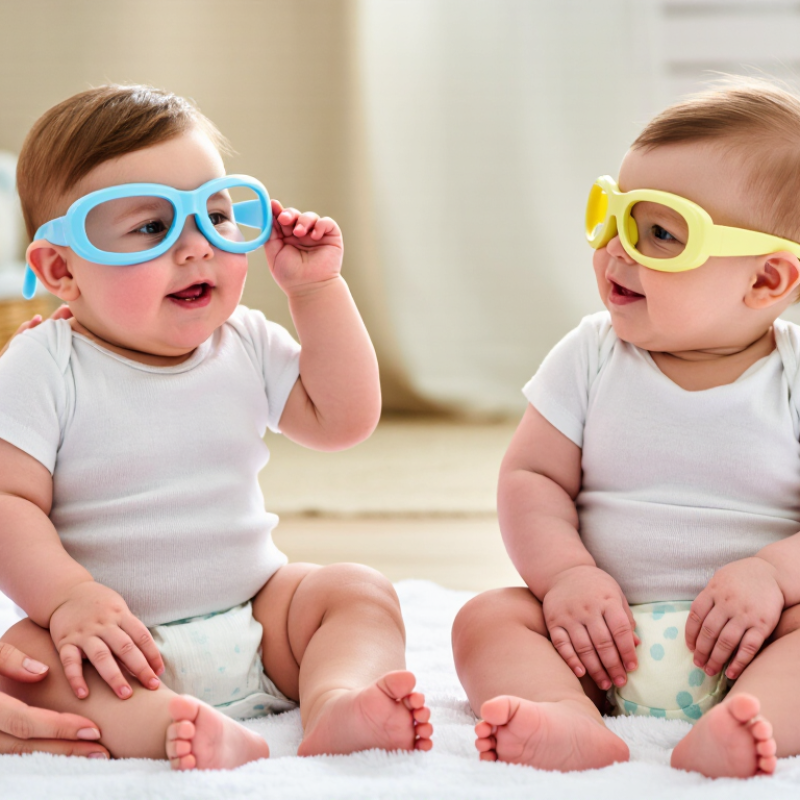
Baby eyewear assortments should reflect more than age labels: visual development, activity, and prescribed correction all matter. For infants under 12 months, prioritize lightweight, flexible frames, soft contact points, and secure straps. Caregivers should check the fit often as babies grow quickly. Toddlers may pull at glasses, so durable hinges and easy-to-clean surfaces matter. Preschoolers may wear frames longer, but bridge fit and stable temples still deserve attention. Fit matters.
Vision needs are not reliably visible at the shelf. The World Health Organization’s World Report on Vision (2019) estimates that 19 million children worldwide have vision impairment; 12 million cases are linked to uncorrected refractive errors. The National Eye Institute notes that amblyopia affects about 2–3% of children in the United States. These figures support stocking prescription-ready options across sizes, rather than assuming every infant needs eyewear. Staff should follow the caregiver’s prescription and an eye-care professional’s fitting guidance, not try to diagnose a condition. That distinction matters.
Ask caregivers about the child’s age, prescription, daily routine, and sensory tolerance. Show how frames sit without pressing the cheeks or slipping during gentle head turns. Invite caregivers to check strap adjustment and lens care. Avoid treating age bands as rules: head shape, bridge height, and acceptance vary widely. I would review fitting feedback regularly; a size chart alone can miss what happens once a child starts crawling.
Request independent lens test reports and clear material specifications. Labels are not enough.
Ask for test results supporting the stated UV protection, including any UV400 claim. Check that lenses meet the relevant sunglass standard for your sales market, such as ISO 12312-1.
Look for smooth edges, secure hinges, and no loose screws or detachable parts. I would inspect a sample; paperwork cannot show every problem.
Try them while the baby sits upright and turns their head. Check for slipping, pinching, or red marks after a few minutes.
No. It should hold its shape and stay in place without pressing the skin. Flexibility alone proves little.
It can help keep frames in place. Check that it does not pull them too tightly.
No. Face shapes vary, even among babies of the same age. Keep several sizes available and recheck the fit during movement.
Pause if the baby becomes upset, then try again calmly. Ask caregivers how the frames behave during normal movement.
Choosing Baby Eyewear Glasses for your store starts with understanding the ages and vision needs of the babies and young children you serve. Consider how different age groups may need different frame sizes, levels of flexibility, and lens features. Prioritize safe, durable materials and construction, then look for frames that sit securely without pinching or slipping. Comfort matters, especially for young wearers who may need time to adjust to glasses.
Select lenses that support clear vision and offer suitable protection for everyday use, and make sure the options match the needs of your customers. A thoughtful range of styles and sizes can help caregivers find a pair that fits well and feels appealing. Plan your stock around the age groups, fits, and lens options most relevant to your store, while keeping a balanced selection available.